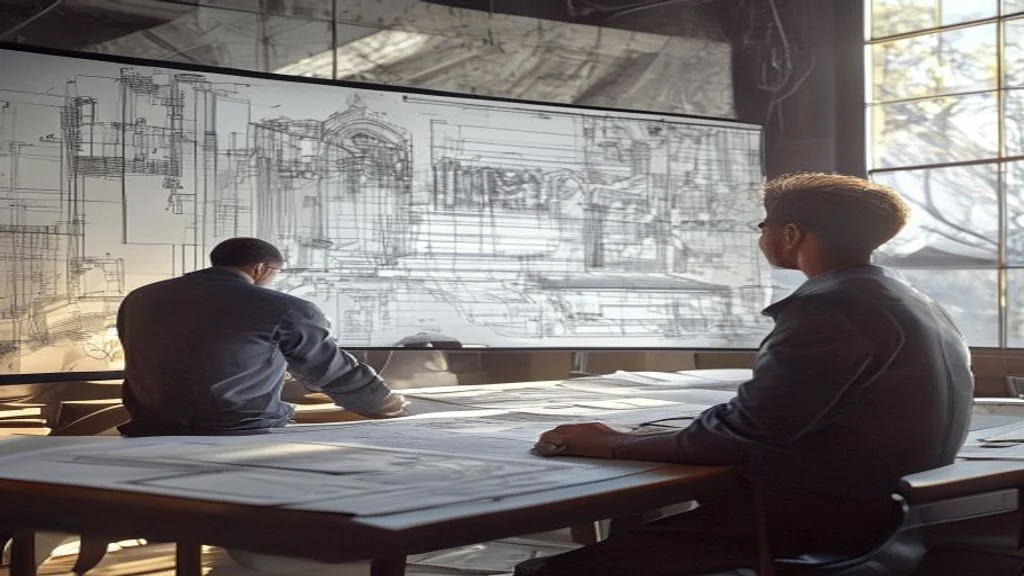
What used to take an Architect days, sometimes weeks, to painstakingly translate into a digital model now takes just a few hours with a new breed of artificial intelligence tools. This capability allows architectural firms to drastically cut down on the initial, often tedious, setup phase of a project, moving straight to design and analysis with unprecedented speed.
For years, the leap from traditional 2D blueprints – whether hand-drawn sketches, CAD files, or scanned legacy plans – to a comprehensive Building Information Model (BIM) has been a significant bottleneck in architectural workflows. This manual conversion process is a labor-intensive chore, requiring Architects and their teams to meticulously trace and reconstruct every wall, window, door, and structural element within BIM software like Autodesk Revit. It’s a process fraught with potential for human error, demanding intense focus and countless hours that could otherwise be dedicated to creative problem-solving or client engagement. The sheer volume of this preparatory work often delays crucial design decisions and impacts project timelines and budgets.
The advent of AI tools for architects that automate this conversion fundamentally shifts this dynamic. Imagine sidestepping the initial weeks of data entry and instead having a robust, intelligent BIM model at your fingertips almost immediately after receiving initial drawings. This isn’t just about saving time; it’s about reallocating valuable human capital towards higher-value tasks, allowing the Architect to truly focus on the art and science of design. With the foundational model established quickly through architecture AI, practitioners can spend more time exploring complex design iterations, performing advanced performance analyses, refining aesthetic details, or engaging with clients on more sophisticated visualizations, rather than wrestling with foundational model creation. This transformative shift, powered by AI building design, empowers firms to take on more projects, deliver faster, and elevate the quality of their initial design proposals and subsequent stages, making them more competitive in a demanding market.
The contrast in workflow is stark when considering the integration of such AI building design capabilities.
Before QikBIM (or similar AI conversion tool): An Architect received a set of 2D PDF blueprints for an existing building needing renovation. The task to create a foundational BIM model for design analysis and coordination involved manually opening Revit, meticulously drawing walls based on dimensions, inserting generic windows and doors, building floor slabs, and aligning structural grids. This process for a mid-sized commercial building could easily consume an experienced modeller’s full attention for 3-5 working days, requiring constant cross-referencing and error checking.
After: The Architect uploads the same 2D PDF blueprints into QikBIM. Within a few hours, the AI processes the visual data, identifies architectural elements, interprets dimensions, and generates a preliminary 3D BIM model. This model, complete with smart objects representing walls, openings, and structural components, is then exported, often in industry-standard formats like IFC or RVT, directly into Autodesk Revit. The Architect then spends an hour or two reviewing, making minor adjustments, adding specific material properties, and is ready to immediately begin detailed design, energy analysis, or clash detection.
The central innovation here is encapsulated by tools like QikBIM, which leverages sophisticated computer vision and machine learning algorithms. These AI tools are trained on vast datasets of architectural drawings, enabling them to understand the context of lines and symbols, distinguishing a wall from a column, or a window from a door opening with remarkable accuracy. They don’t just trace; they interpret intent and reconstruct intelligent 3D geometry from flat data, identifying material layers, specific object types, and even potential relationships between elements. The output is not merely a geometric model but a data-rich BIM that carries intelligence.
Once this AI-generated model is produced, its true power unfolds within established platforms due to excellent interoperability. Importing the foundational BIM from QikBIM into Autodesk Revit AI allows Architects to immediately apply Revit’s advanced capabilities for detailed design development. This includes leveraging Revit’s own intelligent features for structural analysis, MEP coordination, or even using its more nascent AI functionalities for automated detailing or quantity take-offs on a robust, pre-populated model. Furthermore, with a rapid BIM foundation, Architects can then seamlessly integrate generative design AI tools like Spacemaker, TestFit, or Hypar much earlier in the project lifecycle, allowing for exploration of optimal layouts and massing studies without the preceding BIM bottleneck. This acceleration means designs can be optimized for light, energy efficiency, or programmatic fit at stages when changes are less costly. Even creative visualization AI tools like DALL-E architecture can then be used to rapidly render photorealistic design concepts based on the now-readily available 3D data, providing clients with immediate, compelling visuals.
Embracing this new capability doesn’t require a complete overhaul of your firm’s operations overnight. To get started this week, first, assign a tech-savvy Architect or team member to research QikBIM and other similar emerging AI tools in the market; many offer trial versions or detailed demos. Second, identify a pilot project – ideally one with existing 2D documentation that needs BIM conversion, but isn’t on a mission-critical deadline – to apply this new workflow, focusing on understanding the input requirements and output quality. Third, plan a short internal workshop to share findings and integrate the successful aspects of this new process into your firm’s standard operating procedures, particularly concerning how the AI-generated models are refined and integrated with your existing Autodesk Revit workflows.
This capability fundamentally redefines the initial phases of architectural projects, freeing Architects from manual data entry to focus on design innovation and strategic thinking. Proactively exploring and adopting these artificial intelligence tools is no longer an option, but a strategic imperative for any forward-thinking architectural practice.