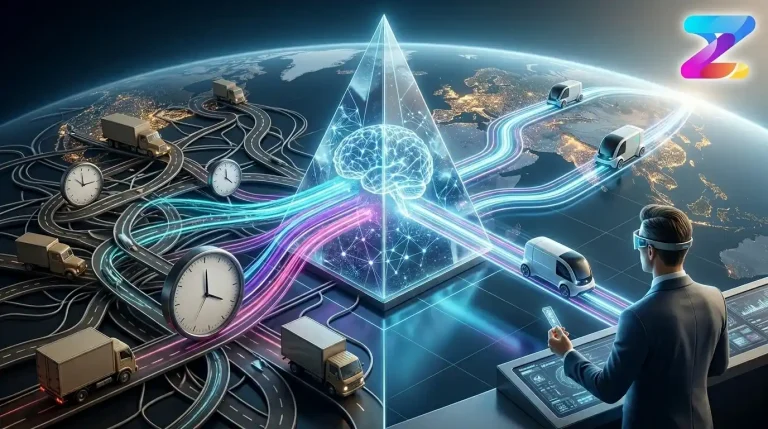
Logistics Managers can now predict potential supply chain disruptions with an accuracy that was previously unimaginable, often weeks before they would have escalated into costly crises. This new capability, powered by AI tools integrated into ERP systems, fundamentally changes how operations are managed, shifting from reactive problem-solving to proactive, strategic execution.
For many Logistics Managers, daily operations have long been a balancing act of managing current shipments, reacting to unexpected delays, and trying to optimize resources based on historical data. The introduction of artificial intelligence tools, particularly when embedded within or integrated with existing Enterprise Resource Planning (ERP) systems, fundamentally alters this dynamic. You’re no longer just looking at what happened; you’re gaining deep insights into what *will* happen, and even what *should* happen. This means moving beyond merely reporting on supply chain performance to actively shaping it, utilizing real-time data combined with sophisticated machine learning algorithms to identify patterns and anomalies that human eyes might miss. Inventory management becomes less about stock levels and more about predictive demand, ensuring optimal inventory positioning and reducing carrying costs. Route optimization evolves from static planning to dynamic, real-time adjustments based on live conditions, directly impacting fuel efficiency and delivery times. Essentially, supply chain AI empowers every Logistics Manager to foresee challenges and seize opportunities with unprecedented clarity, enhancing the overall resilience and efficiency of the logistics network.
Consider the practical application for a Logistics Manager responsible for last-mile delivery. The transformation is striking.
Before AI route optimization: The Logistics Manager typically spent 3-4 hours each morning manually planning routes for a fleet of 50 vehicles, using static mapping software and historical traffic data. Adjustments for unexpected traffic jams, sudden driver unavailability, or urgent priority deliveries required calling drivers, re-evaluating routes on the fly, and often led to significant delays, increased fuel consumption, and missed delivery windows. Customer service spent considerable time fielding calls about late deliveries.
After: The Logistics Manager inputs daily orders, driver availability, and vehicle capacity into an AI route optimization platform integrated with their ERP system. Within 15-20 minutes, the system provides dynamically optimized routes for all 50 vehicles, factoring in real-time traffic, weather, delivery windows, driver rest periods, and even predicted road conditions. When an unexpected event occurs, like a major accident, the AI tools automatically recalculates and suggests alternative routes, notifying drivers and updating customers. This saves the Logistics Manager 2-3 hours of planning time daily, reduces fuel costs by an estimated 10-15% through more efficient routes, and significantly improves on-time delivery rates.
Several powerful artificial intelligence tools are making this level of optimization and foresight possible today. Blue Yonder, for example, is leveraging AI to transform demand forecasting and inventory optimization. By analyzing vast datasets, including market trends, promotional activities, and even social media sentiment, Blue Yonder’s AI can predict demand with greater accuracy than traditional methods, helping Logistics Managers prevent both stockouts and overstocking within their ERP framework. This translates directly to reduced waste and improved customer satisfaction. Similarly, platforms like FourKites and project44 provide real-time visibility into freight movements. These logistics AI tools utilize machine learning to analyze GPS data, weather patterns, and historical performance to offer highly accurate predictive Estimated Times of Arrival (ETAs) and proactive alerts for potential disruptions. For a Logistics Manager, knowing a shipment is likely to be delayed due to impending severe weather days in advance, rather than hours, allows for critical rerouting decisions or alternative sourcing, all fed into and enhancing the data within the core ERP system. While Locus Robotics is more focused on warehouse automation, its underlying AI principles demonstrate how intelligent systems can optimize physical operations, a principle that extends into the broader supply chain AI domain.
So, how can a Logistics Manager start leveraging these capabilities this week? First, identify a specific, high-impact pain point within your current operations that AI could realistically address. Perhaps it’s persistent issues with inventory accuracy, inefficient routing, or a lack of visibility into inbound shipments. Second, research AI tools that specifically target this pain point and offer integration with your existing ERP system. Many vendors offer free trials or demos. Don’t feel you need to overhaul your entire system at once; look for solutions that can connect with your current setup. Finally, start small with a pilot project. Implement a single AI feature, like predictive ETA alerts for a specific lane or AI-driven demand forecasting for a single product category. This allows you to measure tangible results, understand the workflow changes, and build internal confidence before scaling up. The key is to demonstrate value quickly and iteratively.
Embrace these artificial intelligence tools not as a replacement, but as an indispensable co-pilot, augmenting your expertise and transforming operational efficiency from the ground up. The competitive advantage now lies in intelligently leveraging your ERP data with AI to make more informed, proactive decisions.