العربية
 English
 Français
 Deutsch
 हिन्दी
 Português
 Русский
 Español
 Türkçe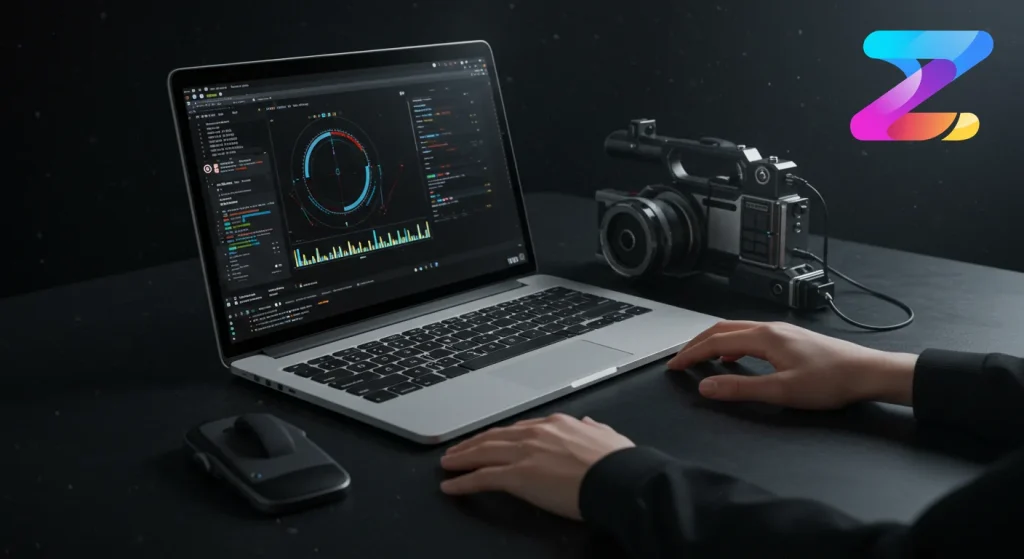
Video Producers can now generate a full minute of voice-over-driven B-roll tailored to their script in under a minute, a task that once demanded hours of searching, downloading, and basic editing. This isn’t just about faster rendering or smarter cuts; it’s about fundamentally rethinking how conceptualization translates into a tangible video draft, dramatically compressing the initial creative hurdle.
What’s truly shifted for the modern Video Producer is the transition from AI being a collection of isolated features to an intelligent co-pilot deeply integrated throughout the entire editing suite. We’re moving beyond just smart object tracking or automated color correction – though those remain invaluable – to a workflow where artificial intelligence tools for video producers can actively participate in content creation, from script to screen. This level of AI post-production integration means mundane, repetitive, and often time-consuming tasks are increasingly automated. Imagine dedicating less time to sourcing generic stock footage or manually syncing audio, and more time to refining the narrative, enhancing the emotional impact, or exploring complex visual storytelling. This isn’t about replacing the human touch but amplifying it, freeing up precious hours that can be reinvested into higher-level creative decision-making.
The implications for daily work are profound. A Video Producer often juggles multiple projects, tight deadlines, and constant demands for fresh content. The capacity for video editing AI to handle the heavy lifting of initial drafts, content generation, and sophisticated clean-up directly addresses these pressures. It means being able to prototype ideas faster, offer more variations to clients, and ultimately deliver higher quality outputs in the same or even less time. The paradigm is shifting from a linear, task-by-task execution to an iterative, AI-augmented creative process where the first draft is no longer a blank slate but a rich, pre-populated canvas, significantly accelerating progress. This is the new frontier for AI tools in video production.
Before this deep integration, crafting a minute of conceptual b-roll for a product explainer video might involve: reading the script, brainstorming visual concepts for each line, searching multiple stock footage libraries for relevant clips, downloading selections, importing them into an NLE, roughly cutting them to fit the script, and then adding a placeholder voiceover. This manual process could easily consume 45 minutes to an hour of a Video Producer’s time, often longer if specific shots were hard to find.
After: The Video Producer pastes the script directly into an AI-powered text-to-video function. The AI analyzes the text, suggests visual concepts, searches or generates corresponding clips, stitches them together into a rough sequence, and even generates a synthetic voiceover that syncs perfectly with the visuals. This entire process, from script input to a coherent draft, now takes less than 5 minutes. The result is a near-instant first pass, ready for immediate review and creative refinement, shaving off significant time from the initial conceptualization and assembly phases.
The specific tools pushing this boundary are evolving rapidly, with platforms like Wondershare Filmora V15 leading the charge in deep AI-integrated workflows. Filmora V15, for instance, now boasts features like AI text-to-video, which can generate video clips from text prompts, and AI text-to-speech, transforming scripts into realistic voiceovers, enabling much faster video editing AI applications. This kind of integration means a Video Producer no longer needs to jump between separate AI video generation tools like Runway ML for generating footage, or Descript for text-based editing and voice cloning. Instead, these powerful artificial intelligence tools are embedded directly within the non-linear editing environment, streamlining the entire creative flow. While Adobe Premiere AI continues to expand its own suite of smart features, Filmora V15 showcases a holistic approach to embedding AI throughout the entire post-production pipeline, making advanced capabilities accessible and intuitive.
To start leveraging these capabilities this week, a Video Producer should first consider downloading a trial of a deeply integrated NLE like Filmora V15. Once installed, take an existing script from a past or current project and experiment with its AI text-to-video and text-to-speech features to generate a rapid prototype. This immediate, hands-on experience will quickly illustrate the time-saving potential. Next, identify one particularly tedious or time-consuming aspect of your current workflow – perhaps noise reduction, background removal, or finding the perfect b-roll – and actively seek out how the new AI tools can automate or significantly accelerate that specific task, understanding that tools like Synthesia and HeyGen continue to advance specialized AI video generation, but the focus here is on integrated editing. Finally, commit to integrating one new AI-powered feature into every project for the next month, even if it’s just for experimentation, allowing you to organically discover its practical benefits and adapt your habits.
The bottom line for every Video Producer is this: AI isn’t here to replace creativity; it’s here to supercharge it. By embracing these deeply integrated AI tools, you can unlock unprecedented efficiency and creative freedom, allowing you to focus on the artistry that truly defines your work.
See Zekai first in Google
The weekly AI briefing for your profession
One weekly email: the AI changes that actually affect your profession — tools, deals, and what to do about them.