AI for ManufacturingThe best manufacturing AI tools, ranked
We track 93 AI tools for manufacturing professionals and rank them by score, so you can pick the right one in minutes. 9 have a free plan you can use today.
The 10 best AI tools for manufacturing professionals in 2026
Ranked by Zekai score, out of 93 tools. Scores weigh accuracy, ease of use, value and time saved for manufacturing professionals, and we check prices against each vendor's site.
- 01
Deploy automated quality control on your factory floor in days with on-device AI vision systems.
- 02
Secure your OT/ICS environment with AI-activated threat detection, trained on a decade of industrial intelligence.
World-class industrial cybersecurity backed by exceptional threat intelligence. Its vulnerability triage pinpoints actionable risks instead of overwhelming security teams with IT-style noise.
- 03
Secure your industrial cyber-physical systems (CPS) and prevent costly downtime with AI-powered threat detection and exposure management.
The definitive benchmark for industrial cyber-physical asset visibility and threat detection. Deep OT protocol inspection prevents catastrophic plant halts with unmatched accuracy.
- 04
A manufacturing automation platform for designing, automating, and deploying custom industrial equipment.
Vention delivers outstanding utility by coupling free web-based CAD with automated industrial hardware procurement, slashing robotic cell deployment from months to weeks.
- 05
Create survey-grade digital twins of your manufacturing facilities to optimize layouts, manage assets, and verify construction.
A premier enterprise solution for capturing industrial digital twins at survey accuracy with wearable SLAM. The hardware investment is considerable, but it collapses plant-scanning timelines from months to day…
- 06
AI-powered CMMS and enterprise asset management platform to increase equipment uptime, reduce costs, and boost frontline productivity.
- 07
Monitor critical industrial assets that vibration sensors can't reach, directly from the motor control cabinet.
Ingenious approach utilizing Electrical Signature Analysis straight from the motor control cabinet to monitor submerged and ATEX assets without physical sensor placement. It reliably solves severe blind spots …
- 08
AI-powered quality inspection for manufacturers to achieve zero defects and slash the cost of poor quality by over 50%.
Outstanding defect inspection capability on lines moving at 1000+ parts per minute down to 150 microns. Rapid SKU retraining under 45 minutes makes it vastly more adaptable than legacy machine vision.
- 09
An AI Knowledge Engine built to transform scattered industrial and enterprise information into accurate real-time insights.
- 10
Equip any industrial robot with universal AI intelligence to autonomously pick, sort, and inspect items in your warehouse.
Truly impressive zero-shot pick-and-place capabilities that eliminate SKU-by-SKU retraining for high-mix logistics. Millions of real-world picks validate its autonomous sorting claims.
All 93 AI tools for manufacturing professionals
Showing 24 of 93
Deploy automated quality control on your factory floor in days with on-device AI vision systems.
PaidDRDragos9.0Secure your OT/ICS environment with AI-activated threat detection, trained on a decade of industrial intelligence.
Contact for Pricing Claroty9.0
Secure your industrial cyber-physical systems (CPS) and prevent costly downtime with AI-powered threat detection and exposure management.
Contact for Pricing Vention8.8
A manufacturing automation platform for designing, automating, and deploying custom industrial equipment.
Free plan NavVis8.7
Create survey-grade digital twins of your manufacturing facilities to optimize layouts, manage assets, and verify construction.
Contact for PricingMAMaintainX8.6AI-powered CMMS and enterprise asset management platform to increase equipment uptime, reduce costs, and boost frontline productivity.
Free planSASamotics8.6Monitor critical industrial assets that vibration sensors can't reach, directly from the motor control cabinet.
Contact for PricingSWSwitchOn8.5AI-powered quality inspection for manufacturers to achieve zero defects and slash the cost of poor quality by over 50%.
Pricing on requestCACanvass AI8.4An AI Knowledge Engine built to transform scattered industrial and enterprise information into accurate real-time insights.
PaidSESereact8.4Equip any industrial robot with universal AI intelligence to autonomously pick, sort, and inspect items in your warehouse.
Contact for Pricing nTopology8.4
Accelerate industrial design from weeks to days with unbreakable, logic-driven models for complex manufacturing challenges.
Pricing on request Tractian8.3
Predict machine failures and prevent downtime with an AI-powered condition monitoring and CMMS platform for industrial operations.
Paid (from R$150/user/mo)BOBoston Dynamics8.2Deploy mobile robots like Spot and Stretch for industrial site inspection, dynamic sensing, and automated warehouse case handling.
Paid Standard Bots8.2
Automate complex manufacturing tasks with AI-native robots that learn by demonstration, no coding required.
Paid (Hardware from $29,500) Landing AI8.2
Convert complex industrial documents like machinery manuals and compliance reports into structured, queryable data.
Free plan Plataine8.1
AI-powered optimization for advanced manufacturing, boosting throughput, cutting waste, and ensuring on-time delivery.
Contact for Pricing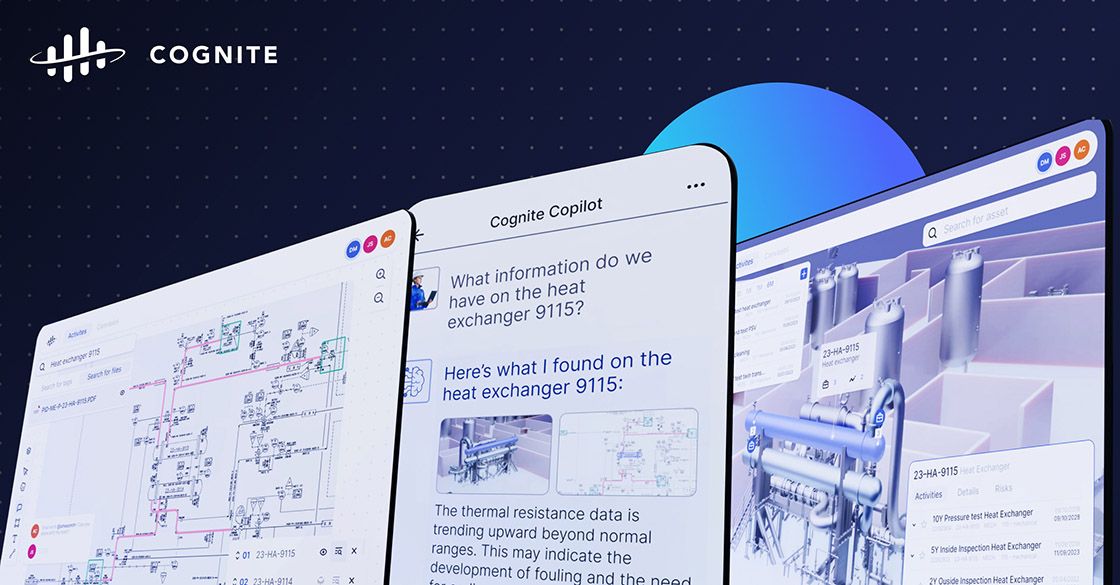 Cognite8.1
Scale industrial AI across your enterprise to optimize production, slash downtime, and increase productivity 10x.
Contact for Pricing Elementary8.0
Eliminate production line defects with an AI vision system that learns your quality standards automatically.
Contact for Pricing TrendMiner8.0
Turn your plant's operational data into actionable insights for production efficiency and asset performance.
Contact for Pricing Viam8.0
Build, deploy, and manage industrial robotics applications using a single, scalable software platform.
Free plan Cognex VisionPro Deep Learning8.0
Automate defect detection with AI-powered vision
Commercial licensing Sidekick7.9
Turn shop floor texts from any worker into triaged, tracked, and resolved work orders automatically.
Pricing on request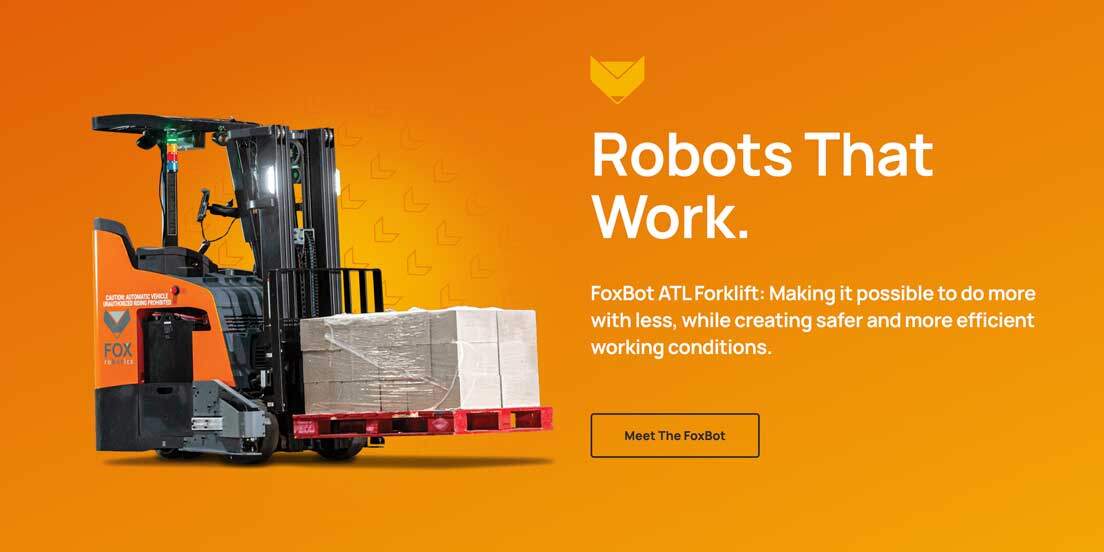 Fox Robotics7.9
Automate your loading dock with autonomous forklifts that install in an hour and require no WMS integration.
Contact for Pricing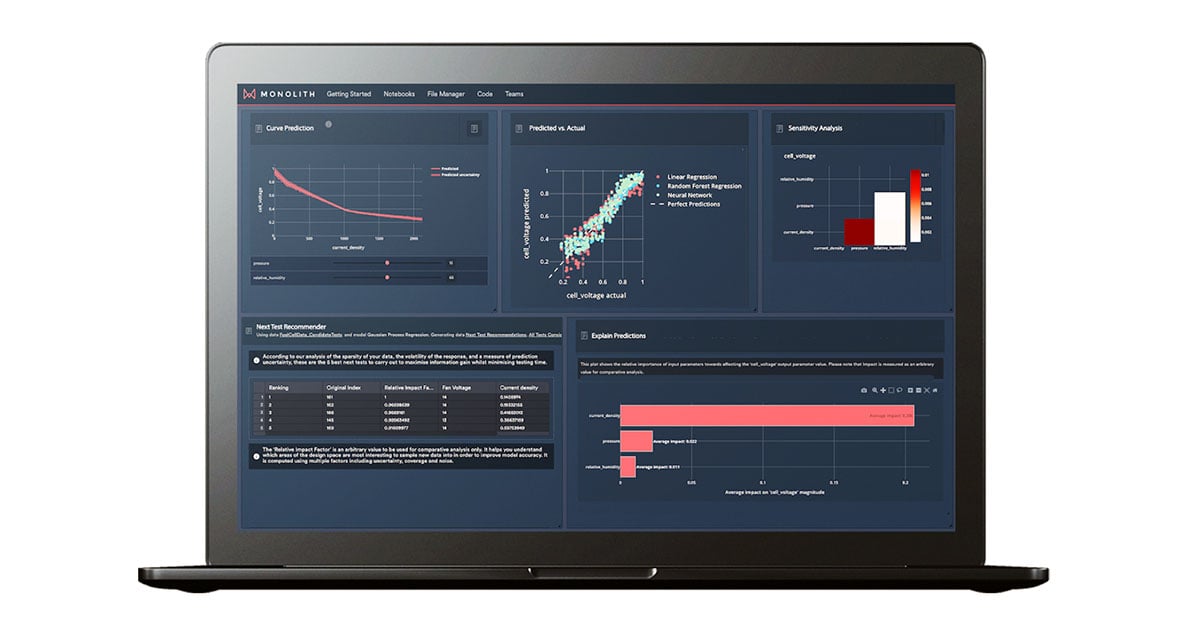 Monolith AI7.9
Slash physical prototyping and test plan time by up to 70% using AI trained on your existing engineering data.
Contact for PricingAll 93 tools A–Z
Start free today: 9 tools with a free plan
No card needed to try these. The best-scored free options for manufacturing professionals.
VentionA manufacturing automation platform for designing, automating, and deploying custom industrial equipment.
Free plan · 8.8/10MAMaintainXAI-powered CMMS and enterprise asset management platform to increase equipment uptime, reduce costs, and boos…
Free plan · 8.6/10Landing AIConvert complex industrial documents like machinery manuals and compliance reports into structured, queryable…
Free plan · 8.2/10ViamBuild, deploy, and manage industrial robotics applications using a single, scalable software platform.
Free plan · 8.0/10FAFactory AIPredict equipment failures and streamline maintenance with a single, sensor-agnostic AI platform.
Free plan · 7.8/10 MakinaRocks
Deploy specialized AI to optimize manufacturing and industrial processes, from autonomous machine operation t…
Free plan · 6.6/10ANAndustryAI-powered global sourcing for industrial parts, cutting costs by an average of 30% and delivering verified s…
Free plan · 6.0/10 Enao Vision
Monitor your production line using just an iPhone and AI. Enao Vision turns consumer hardware into a powerful…
Free plan · 5.8/10Get paid for what you know as a manufacturing professional
AI companies pay manufacturing professionals by the hour to check and improve their AI. Remote, on your own hours. Applying through Zekai is free.
Learn AI for manufacturing professionals. 5 minutes a day.
A free 30-day challenge built around real work for manufacturing professionals. One short drill each morning in the AI assistant you already use.
- 1Sign upDay 1 arrives right away, then one email each morning.
- 25 minutes a dayRun the drill on your own work. Miss a day? Nothing breaks.
- 3Finish strongComplete 30 drills and claim your Zekai certificate.
Done. Check your inbox to confirm.
ChatGPT prompts for manufacturing professionals
Copy, paste and fill in the brackets. Works in ChatGPT, Claude, Gemini or Copilot.
Generate a Shift Handoff Report
Act as a Plant Production Supervisor. Generate a concise shift handoff report for the end of the day shift on [[Date]].
Use the following template and information:
• Shift: Day Shift (07:00 - 15:00)
• Production Line: [[e.g., CNC Milling Line 3]]
• Production Target (Units): [[e.g., 800]]
• Actual Production (Units): [[e.g., 752]]
• Downtime Events:
• [Event 1: e.g., 10:15 - 10:45 (30 min), Machine M-301, Jammed conveyor belt, Cleared by maintenance tech John S.]
• [Event 2: e.g., 14:00 - 14:20 (20 min), Machine M-305, Coolant pressure alarm, Topped up by operator.]
• Quality Issues:
• [Issue 1: e.g., 5 units of Part #789-C failed dimensional check at 11:30. Quarantined and documented in NCR #2026-09-03-A.]
• Safety Incidents/Near Misses:
• [[Incident: e.g., None.]]
• Maintenance Actions Required for Next Shift:
• [Action 1: e.g., Monitor coolant pressure on M-305. Maintenanc…
Draft a Daily Production Meeting Agenda
Generate a 15-minute daily production meeting agenda for tomorrow, [[Date]]. The focus is on reviewing yesterday's performance and setting today's priorities for the assembly department.
Include these specific talking points:
1.  Safety Minute: A brief reminder about [[e.g., proper lifting techniques]].
2.  Performance Review (Previous Day):
• OEE: [[e.g., 78%]]
• Production Target vs. Actual: [[e.g., 1200 vs. 1150]]
• Key Downtime Reason: [[e.g., Feeder misalignment on Line 2]]
3.  Today's Priorities:
• Key Production Goal: [[e.g., 1250 units, including recovery]]
• Focus Area: [[e.g., Line 2 stability and monitoring]]
• Known Changeovers: [[e.g., Product B to Product C on Line 4 at 10:00 AM]]
4.  Resource Allocation:
• Staffing issues or changes: [[e.g., Mark is out sick, float operator will cover Line 3]]
5.  Open Floor (2 min): For immediate roadblocks o…
Draft a Non-Conformance Report (NCR)
Act as a Quality Engineer. Draft a Non-Conformance Report (NCR) based on the following details. Structure it for an ISO 9001 compliant system.
• Part Number: [[e.g., F-451-B]]
• Part Name: [[e.g., Bearing Housing]]
• Quantity Affected: [[e.g., 32]]
• Date of Discovery: [[e.g., 2026-09-03]]
• Discovered By: [[e.g., Operator, Jane Doe]]
• Location/Process: [[e.g., Final Inspection, CMM Station 2]]
• Description of Non-Conformance: [e.g., The internal bore diameter measures 50.15mm +/- 0.05mm. The specification is 50.00mm +/- 0.05mm. The parts are oversized.]
• Immediate Action Taken: [e.g., All 32 parts were segregated and moved to the quarantine cage. Production on the responsible machine (CNC Lathe #5) was halted pending investigation.]
Generate a formal NCR document including fields for:
• NCR Number (use format NCR-YYYY-MM-DD-X)
• Part Information
• Description of Non-conformance
• …
Create a Quality Alert for the Production Floor
Generate a single-page Quality Alert to be posted on the production floor. The alert needs to be clear, visual, and easy to understand for all operators.
• Part Number: [[e.g., P-9980]]
• Issue: [[e.g., Surface scratches found near the mounting holes.]]
• Inspection Method: [e.g., Visually inspect each part under the task light before packing.]
• Good Part Example Description: [[e.g., Smooth, uniform surface with no visible marks.]]
• Bad Part Example Description: [[e.g., Visible linear scratches, feels rough to the touch.]]
• Action for Bad Parts: [[e.g., Place in the red bin at your station. Do not pack.]]
• Date of Alert: [[e.g., 2026-09-03]]
Use simple language, bullet points, and clear headings. Include placeholders like [[IMAGE OF GOOD PART]] and [[IMAGE OF BAD PART]].
Generate a Machine-Specific Lockout/Tagout (LOTO) Procedure
Act as a Safety Engineer. Create a machine-specific Lockout/Tagout (LOTO) procedure compliant with OSHA standard 29 CFR 1910.147.
• Equipment Name: [[e.g., ACME Model 5 CNC Press Brake]]
• Equipment ID: [[e.g., PB-07]]
• Location: [[e.g., Fabrication Bay 2]]
• Energy Sources to Isolate:
1. Electrical: Main disconnect (Panel P-11, Breaker #3, 480V). Located on the wall behind the machine.
2. Hydraulic: Ball valve on the main hydraulic pump unit. Located inside the rear access panel. Requires bleeding pressure at test port TP-1 after closing.
3. Pneumatic: Gate valve on the air supply line above the machine. Requires releasing trapped air via the purge valve next to the FRL unit.
Generate a step-by-step procedure including:
1.  Purpose
2.  Required PPE
3.  Shutdown Sequence
4.  Energy Isolation Sequence
5.  Verification of Zero Energy State
6.  Procedure for Restoring to Service
…
Draft a Job Safety Analysis (JSA)
Create a Job Safety Analysis (JSA) for the task of 'Changing the blade on a vertical band saw'.
Identify the basic job steps, potential hazards for each step, and the recommended safe job procedures to mitigate those hazards. Use a three-column table format.
Task: Changing the blade on a vertical band saw
Location: Machine Shop
Job Steps to Analyze:
1.  Preparing for the task.
2.  Removing the old blade.
3.  Installing the new blade.
4.  Testing and cleanup.
Potential Hazards to Consider:
• Unexpected startup (electrical)
• Stored energy in blade tension
• Lacerations from sharp blade
• Pinch points in rollers and guides
• Eye injury from flying debris
Will AI replace manufacturing professionals?
No. AI predicts breakdowns and catches defects, while running the plant, safety and improvement stay with people.
What AI already does
- Predicts machine failures from sensor data
- Spots defects with cameras on the line
- Plans production and inventory
What stays human
- Running the floor and leading teams
- Safety decisions and root-cause fixes
- Process improvement and new products
- Start with quality inspection or maintenance
- Keep operators in the loop on every alert
The problems AI is fixing for manufacturing professionals
Unexpected Downtime
Sudden machine breakdowns halt entire production lines, costing thousands of dollars per minute.
Predictive AI analyzes vibration and heat sensors to forecast failures weeks in advance.Inconsistent Quality Control
Human visual inspections are slow and prone to fatigue, letting microscopic defects slip through.
AI vision systems inspect products at high speeds with near-perfect accuracy.Rigid Production Schedules
Static planning can't adapt to sudden raw material shortages or urgent high-priority orders.
AI dynamically reroutes workflows and reschedules production instantly.Worker Safety Risks
Industrial environments are dangerous, and human error can lead to severe accidents.
AI camera systems monitor safety protocols and alert workers to hazards in real time.Guides for manufacturing professionals
Best AI for Automotive Manufacturing in 2026
Discover verified AI tools for automotive manufacturing, edge deployment, quality inspection, and design optimization evaluated for factory…
4 Oct 2026Best Free AI Tools for Manufacturing Engineers (2026)
A verified list of genuinely free AI tools for manufacturing engineers.
25 Sep 202612 Best AI Tools for Manufacturing Engineers in 2026 (Tested)
We tested and ranked the top 12 AI tools for manufacturing engineers. See current pricing, features, and our independent verdicts as of Sep…
23 Sep 2026AI for Manufacturing: The Complete 2026 Guide (Tools, Prompts)
A practical guide to AI in manufacturing. We review the best AI tools for predictive maintenance, quality control, and process optimization…
21 Sep 2026How to Use AI for Process Optimization (2026 Guide)
A practical guide for manufacturing professionals on using AI for process optimization.
20 Sep 2026How Manufacturing Engineers Use AI in 2026 (Real Workflows)
A practical guide to how manufacturing engineers use AI today.
18 Sep 2026Questions about AI for manufacturing professionals
What are the best AI tools for manufacturing professionals in 2026?
Are there free AI tools for manufacturing professionals?
Can manufacturing professionals get paid to train AI?
Will AI replace manufacturing professionals?
Can AI be connected to machine safety systems and production control?
How much do AI tools for manufacturing cost?
Does predictive maintenance actually reduce breakdowns in practice?
How much data quality do AI manufacturing tools need?
What should a small manufacturer adopt first?
AI for other professions
Stay ahead with AI for manufacturing professionals
The best new tools, price drops and paid roles for manufacturing professionals. One short email a week.
Done. Check your inbox to confirm.