العربية
 English
 Français
 Deutsch
 हिन्दी
 Português
 Русский
 Español
 Türkçe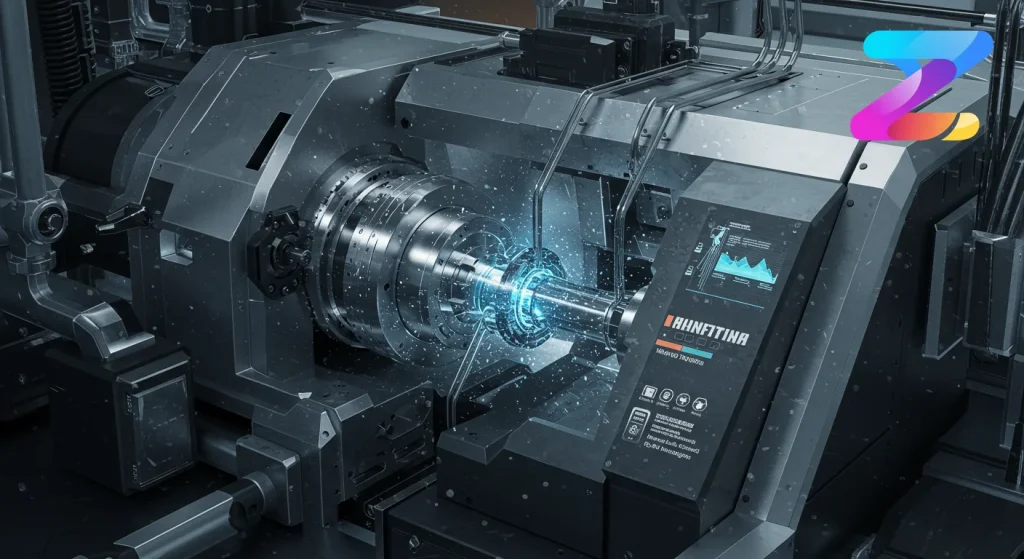
Manufacturing lines are now routinely cutting unplanned downtime by up to 25% through AI-powered predictive insights, a capability that shifts maintenance from reactive firefighting to strategic foresight. This isn’t about distant future tech; it’s about practical AI tools for manufacturing that deliver tangible results right now, enabling a Manufacturing Engineer to make decisions with unprecedented clarity.
For the Manufacturing Engineer, this shift is profound. What used to be a constant battle against unexpected equipment failures, quality deviations, and inefficient processes is rapidly evolving into a more proactive, data-driven discipline. Imagine spending less time scrambling to fix unforeseen breakdowns and more time optimizing production flows, innovating product quality, and fine-tuning energy consumption. AI tools for manufacturing are changing the daily grind by providing insights into machine health, production anomalies, and even supply chain vulnerabilities before they escalate into costly problems. This means a Manufacturing Engineer can move from reacting to historical data to predicting future states, truly transforming operational strategy and output performance.
Beyond just predictive maintenance, industrial AI is enabling advanced quality control, where AI vision systems detect minuscule defects human eyes might miss, and process optimization algorithms suggest real-time adjustments to maximize throughput and minimize waste. These artificial intelligence tools essentially act as an omnipresent, hyper-vigilant assistant, continuously monitoring every facet of the production environment. The result is not just improved efficiency but also a more consistent product quality and a safer working environment, giving the Manufacturing Engineer powerful leverage to meet and exceed production targets.
Before AI predictive maintenance: A Manufacturing Engineer would often rely on scheduled preventive maintenance cycles or, more commonly, react to sudden machine breakdowns. Diagnostics involved manual inspections, often after a critical failure had already occurred, requiring hours or even days to identify the root cause and procure necessary parts. This invariably led to unplanned downtime, significant production losses, and the stressful scramble to get lines back online.
After: AI-powered condition monitoring continuously analyzes data streams like vibration, temperature, current draw, and acoustics from critical equipment. It alerts the Manufacturing Engineer to subtle anomalies weeks, sometimes months, in advance of a potential failure. The engineer receives a prioritized alert, often with a preliminary diagnosis or an indication of the failing component. This allows for proactive ordering of parts, scheduling maintenance during planned downtime or off-hours, and often resolving an issue before it impacts production at all. What might have been days of unplanned downtime now becomes a few hours of scheduled, targeted maintenance, thanks to smart AI tools.
Several powerful AI tools are making this possible for any Manufacturing Engineer. Platforms like Augury specialize in AI predictive maintenance, using sensor data and machine learning to diagnose machine health with remarkable accuracy, turning complex data into actionable insights for the maintenance and engineering teams. For comprehensive factory-wide data analysis and process optimization, Sight Machine provides a manufacturing data platform that ingests and analyzes vast amounts of production data, helping identify bottlenecks and areas for improvement. For advanced quality inspection, Cognex AI vision systems offer deep learning capabilities to automate defect detection with precision that surpasses traditional rule-based systems. Larger players like Rockwell Automation AI and Siemens AI are integrating these capabilities into their broader industrial automation suites, offering end-to-end solutions for a truly connected factory.
To start leveraging these capabilities this week, a Manufacturing Engineer should first identify one critical machine or process that frequently causes unplanned downtime or quality issues. Second, research and select an accessible AI tool for condition monitoring or visual inspection that can be implemented in a pilot project on that specific asset; many vendors offer trials or scalable entry points. Third, focus on collecting clean, relevant data from that chosen area – this is the fuel for any successful manufacturing AI initiative – and begin familiarizing your team with the new data streams and insights. Embracing these artificial intelligence tools incrementally is the most effective path to tangible results.
The single most important thing for any Manufacturing Engineer to grasp today is that AI is not a far-off concept; it is an accessible, practical toolkit capable of delivering immediate and measurable improvements to efficiency and uptime. These AI tools are designed to amplify your expertise, not replace it, enabling smarter, more proactive decisions across your operations.
See Zekai first in Google
The weekly AI briefing for your profession
One weekly email: the AI changes that actually affect your profession — tools, deals, and what to do about them.