العربية
 English
 Français
 Deutsch
 हिन्दी
 Português
 Русский
 Español
 Türkçe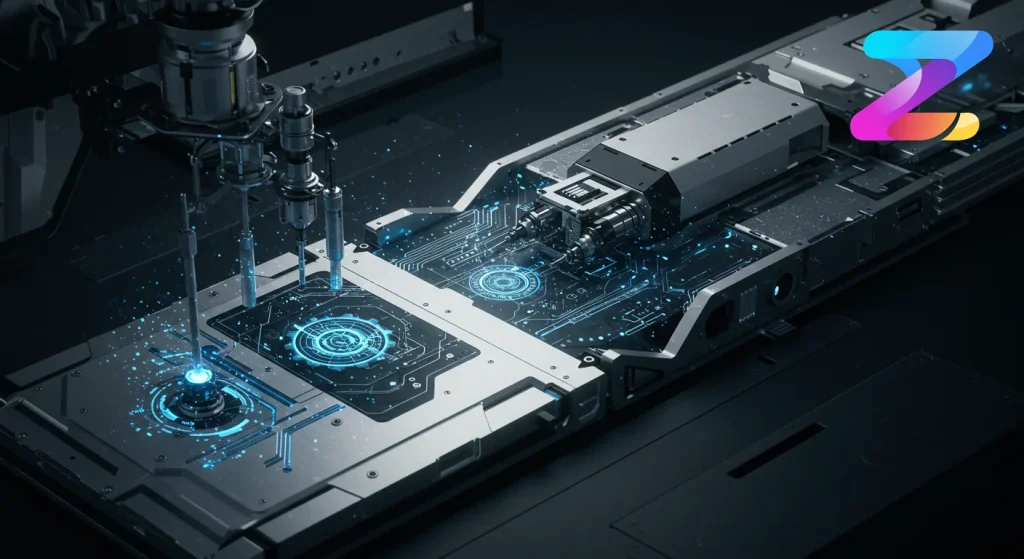
A significant pattern is emerging that will redefine the operational landscape for Manufacturing Professionals: the evolution of artificial intelligence from advisory tools to autonomous agents capable of executing complex tasks. Siemens has just unveiled Eigen, an industrial AI engineering agent that embodies this shift, promising up to 50% efficiency gains in automation engineering as it becomes commercially available.
This development signifies a fundamental change in how Manufacturing Professionals will interact with AI. Unlike traditional AI tools or copilots that provide recommendations or assistance, Eigen is designed to operate directly within real engineering systems. It can autonomously plan, execute, and validate tasks, understanding project requirements, writing automation code, and configuring systems, iterating until performance benchmarks are met. For a Manufacturing Professional overseeing production lines, this means a tangible reduction in the manual effort required for complex programming and system setup, allowing for quicker deployment of new production processes or modifications to existing ones.
Imagine an AI agent taking on the repetitive, time-consuming aspects of PLC programming, HMI development, or SCADA system configuration. This frees up skilled Manufacturing Professionals to focus on higher-impact challenges: optimizing overall system architecture, troubleshooting unique operational issues, or innovating new production methodologies. The 50% efficiency gain is not just a number; it represents a significant boost in productivity, faster time-to-market for new products, and a reduction in potential human error in intricate coding and configuration, enhancing reliability and quality across the factory floor. It fundamentally shifts the role of the automation engineer from a coder to a strategic orchestrator and supervisor of intelligent systems.
Several AI tools are critical for Manufacturing Professionals to understand as this trend accelerates. Siemens’ Eigen stands out as an example of an agentic industrial AI tool, designed for deep integration and autonomous task execution within automation engineering platforms like Siemens TIA Portal. Beyond agentic systems, AI predictive maintenance tools are transforming how assets are managed. Companies like Uptake offer robust AI predictive maintenance solutions that analyze vast quantities of operational data from machinery to anticipate failures before they occur. This allows Manufacturing Professionals to move from reactive or time-based maintenance schedules to proactive, condition-based strategies, drastically reducing downtime and extending equipment lifespans. Integrating various AI tools, from vision systems by companies like Cognex for quality control to broader manufacturing AI platforms, allows for a more comprehensive approach to smart factory operations. The overarching goal is to equip Manufacturing Professionals with a suite of artificial intelligence tools that enhance decision-making, optimize resource allocation, and drive continuous improvement.
Industry leaders are echoing the sentiment that this transition from supportive AI to executive AI is profound. Vasi Philomin, Executive Vice President of Data and AI at Siemens, emphasizes this by stating, “The real big shift here is that we are moving away from AI that supports, to AI that actually completes work end-to-end and we’re doing this in the context of real world engineering systems.” This perspective is further supported by external analysts. Liam Chen, a senior analyst specializing in industrial automation at TechInsights Group, notes, “The introduction of tools like Eigen signifies a pivotal moment. It’s not just about faster code generation; it’s about autonomous system configuration, which demands a new level of oversight and strategic thinking from engineers on the factory floor. Manufacturing Professionals are becoming orchestrators of intelligent systems, ensuring that these AI tools align with strategic production goals and operational safety standards.”
For Manufacturing Professionals eager to adapt to this evolving landscape, there are concrete steps to take this week. First, dedicate time to understanding the capabilities of industrial AI and, specifically, the concept of AI agents. Explore resources available through platforms like Siemens Xcelerator, attend relevant webinars, or read whitepapers on how such artificial intelligence tools are being deployed in real-world manufacturing environments. Second, identify a specific, recurring automation engineering task within your operations that currently consumes significant human effort or is prone to errors. Begin to envision how an AI agent could streamline this process, even if it’s a conceptual exercise, to prepare for future implementations. Third, invest in continuous professional development by seeking out online courses or certifications focused on industrial AI, data analytics for manufacturing, or advanced automation strategies. Understanding the underlying principles of manufacturing AI will be crucial for effective management and supervision of these powerful new tools.
The deployment of industrial AI agents like Eigen marks a pivotal moment, signaling a future where AI moves beyond analysis to active execution within manufacturing systems. For Manufacturing Professionals, this means a shift towards higher-level problem-solving, strategic oversight, and a dramatically more efficient, agile, and resilient production environment driven by sophisticated AI tools for manufacturing professionals.
Frequently Asked Questions
How do industrial AI agents differ from existing AI tools for manufacturing professionals?
Unlike many current AI tools that offer advice or analyze data, industrial AI agents like Siemens’ Eigen can autonomously plan, execute, and validate tasks directly within real engineering systems, taking action rather than just suggesting it.
Will AI agents replace the need for skilled Manufacturing Professionals?
No, AI agents are designed to augment and enhance the capabilities of Manufacturing Professionals by automating repetitive and complex tasks. This allows professionals to focus on higher-value activities like strategic planning, innovation, and overseeing these intelligent systems.
What’s a practical first step for a Manufacturing Professional to engage with this trend?
A practical first step is to educate yourself on industrial AI concepts, particularly autonomous agents, and identify a specific, repetitive automation task within your facility that could potentially be streamlined by such AI tools in the future.
See Zekai first in Google
The weekly AI briefing for your profession
One weekly email: the AI changes that actually affect your profession — tools, deals, and what to do about them.