العربية
 English
 Français
 Deutsch
 हिन्दी
 Português
 Русский
 Español
 Türkçe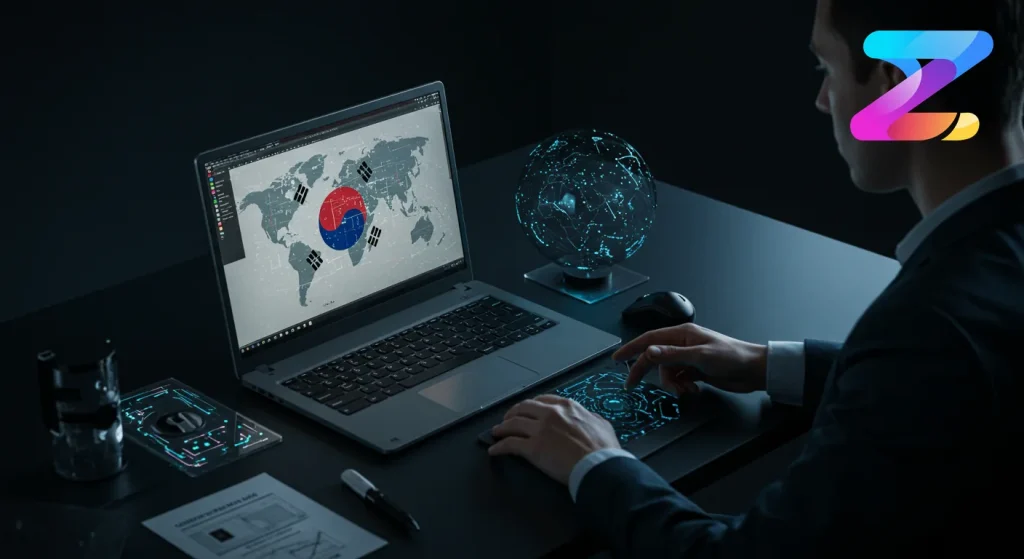
South Korea is poised to enforce two unprecedented laws aimed at curbing AI deepfakes during its upcoming local elections on June 3. This landmark move transforms the nation into a real-world test bed for regulatory effectiveness against AI-generated disinformation, a development with significant implications for Cybersecurity Professionals worldwide.
This immediate regulatory action in South Korea serves as a critical wake-up call for Cybersecurity Professionals. Deepfakes, once a niche concern, have rapidly matured into potent tools for highly sophisticated social engineering and identity-based attacks. The ease with which convincing deepfakes can now be generated, as noted by Brian Long, CEO of Adaptive Security, means that what previously required advanced technical skill can now be done in minutes with consumer-grade AI tools. For organizations, this translates into a heightened risk of targeted phishing, elaborate business email compromise (BEC) schemes, and even internal sabotage where a deepfake could impersonate a CEO or senior executive issuing fraudulent directives or requesting sensitive data.
The real-world impact is already evident: a deepfake robocall impersonating then-US President Joe Biden urged voters not to participate in the New Hampshire primary, while South Korea itself has battled fake videos of political candidates and AI-generated news reports. These incidents, while political in origin, highlight the core threat to identity and trust that Cybersecurity Professionals must now proactively address within their own environments. Verifying the authenticity of audio and video communications, whether internal or external, is no longer a fringe security concern but a critical component of incident response and overall cyber resilience. The challenge for IT security AI is to keep pace with the rapid advancements in generative AI that attackers are leveraging.
To counter this evolving threat, Cybersecurity Professionals need to leverage sophisticated artificial intelligence tools. Solutions like Darktrace, with its self-learning AI, can detect subtle anomalies in network traffic and user behavior that might indicate a deepfake-driven attack, even if the content itself isn’t directly analyzed. For instance, an unusual access attempt following a deepfake social engineering attempt or a deviation in communication patterns could trigger alerts. CrowdStrike AI and SentinelOne offer advanced endpoint detection and response (EDR) capabilities that, while not directly identifying deepfake content, can flag suspicious processes or malware delivered as part of a deepfake campaign. Vectra AI specializes in AI threat detection by observing network behaviors and identifying attacker-like movements, which could include the reconnaissance or payload delivery stages of a deepfake-facilitated breach. Microsoft Sentinel, as a robust SIEM platform, can integrate data from various sources to provide a holistic view, correlating indicators that might collectively point to a deepfake-related incident, strengthening overall cybersecurity AI posture.
“While South Korea’s initiative is a commendable first step in global deepfake governance, Cybersecurity Professionals cannot afford to wait for legal frameworks to catch up,” states Dr. Anya Sharma, Lead Threat Intelligence Analyst at SecurePath Solutions. “The core issue isn’t just about regulating malicious content, but about mitigating the exploitation of human trust. Our defensive strategies must evolve beyond purely technical indicators to incorporate advanced behavioral analytics, continuous identity verification, and a comprehensive understanding of how AI tools are being weaponized. The channels that regulators struggle to reach are precisely where our adversaries operate, making a proactive security stance paramount for any organization.” This underscores the need for proactive measures beyond legislative action.
Cybersecurity Professionals can begin strengthening their defenses against deepfake threats this week by taking concrete steps. First, review and update incident response plans to specifically address deepfake scenarios, including protocols for verifying the authenticity of critical audio or video requests, especially those related to financial transactions or sensitive data access. Second, enhance user awareness training by educating employees on the characteristics of deepfakes, emphasizing the importance of critical thinking, and establishing clear, multi-factor verification processes for any unusual requests received via audio or video. Third, evaluate current AI threat detection capabilities within existing security stacks, specifically looking at how AI tools for cybersecurity professionals can identify anomalous identity behaviors or communication patterns that might signal a deepfake-orchestrated attack, and consider piloting advanced artificial intelligence tools for deeper behavioral analysis.
South Korea’s bold move highlights the growing recognition of deepfakes as a severe threat, moving them from theoretical discussion to legislative action. For Cybersecurity Professionals, this signals an urgent imperative to fortify defenses, leverage AI tools, and educate workforces against a rapidly evolving threat vector that directly targets trust and identity. The coming weeks will reveal the initial efficacy of regulatory intervention, but proactive security measures remain the most reliable defense for organizations.
Frequently Asked Questions
How do deepfakes specifically impact a Cybersecurity Professional’s daily work?
Deepfakes pose significant risks by enabling sophisticated social engineering and identity-based attacks. This means Cybersecurity Professionals must focus more on verifying the authenticity of communications, updating incident response plans for deepfake scenarios, and enhancing user training to recognize deepfake characteristics. It also necessitates leveraging advanced AI tools for behavioral analytics and anomaly detection to counter these new forms of deception. Deepfakes can lead to targeted phishing, BEC schemes, and even internal sabotage through impersonation, requiring more robust identity verification and a proactive security posture.
See Zekai first in Google
The weekly AI briefing for your profession
One weekly email: the AI changes that actually affect your profession — tools, deals, and what to do about them.