العربية
 English
 Français
 Deutsch
 हिन्दी
 Português
 Русский
 Español
 Türkçe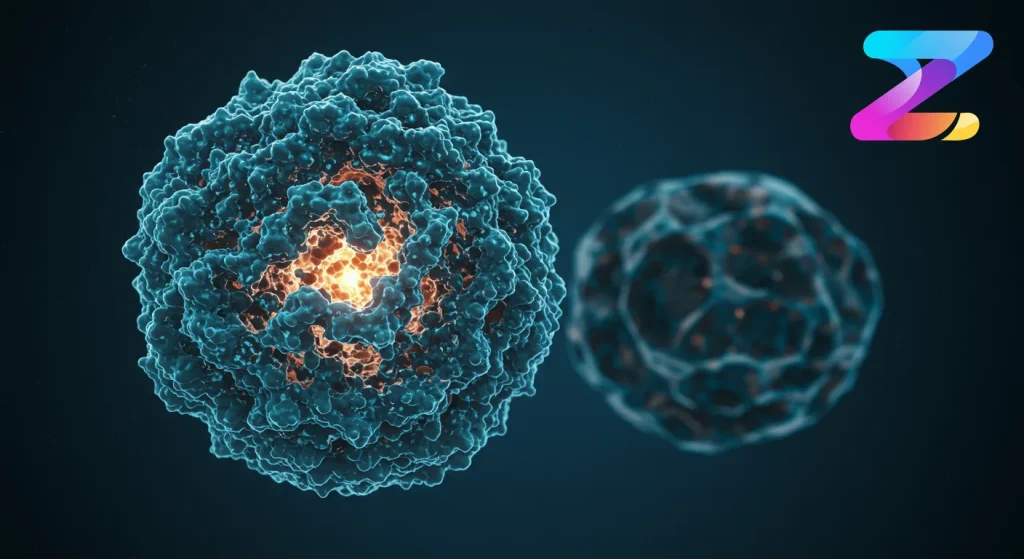
Pharma Researchers can now accurately predict the 3D structure of a protein in mere minutes or hours, a process that once required months or even years of painstaking laboratory work. This capability promises to fundamentally reshape the pace and efficiency of drug discovery workflows, offering unprecedented clarity into molecular interactions crucial for therapeutic development. The power of artificial intelligence tools has moved beyond abstract concepts and into the daily realities of structural biology.
For decades, determining the precise 3D architecture of a protein – the molecular key to understanding its function and how a drug might bind to it – was a formidable bottleneck in pharmaceutical research. Techniques like X-ray crystallography, NMR spectroscopy, and cryo-electron microscopy (cryo-EM) are extraordinarily powerful but also notoriously resource-intensive, time-consuming, and often yield challenging results or outright failures for many protein targets. Now, with the advent and widespread adoption of sophisticated AI systems, particularly those inspired by Google DeepMind’s AlphaFold, a Pharma Researcher can bypass much of this experimental hurdle.
This seismic shift means that understanding a novel drug target’s active site, identifying potential allosteric pockets, or even predicting protein-protein interactions no longer requires waiting months for a crystal structure. Instead, a Pharma Researcher can generate highly accurate structural models computationally, often within hours. This immediate access to structural insights democratizes rational drug design, allowing research teams to pivot from target validation to lead optimization with dramatically increased speed and informed decision-making. The ability to rapidly screen thousands of potential protein structures for disease relevance or drugability drastically accelerates early-stage drug discovery AI efforts and significantly improves the chances of identifying viable candidates. It’s a fundamental change in how we approach the foundational steps of creating new medicines.
Consider a Pharma Researcher tasked with finding novel inhibitors for a previously uncharacterized protein involved in a rare disease.
Before AI tools for pharma researchers: The researcher would embark on a protracted journey of protein expression, purification, and crystallization trials, potentially lasting anywhere from six months to two years, with no guarantee of success. If a crystal structure was obtained, solving and refining it would add further weeks. Only then could structure-based drug design begin, relying on that hard-won experimental data. Failed crystallization attempts meant starting over or abandoning the target.
After: Using computational AI tools and leveraging publicly available models (like those derived from AlphaFold’s principles) or commercial platforms, the Pharma Researcher can input the protein’s amino acid sequence and obtain a high-accuracy 3D structural model within a few hours or a day. This immediate structural data allows for rapid in-silico screening, virtual ligand docking, and the design of targeted experimental constructs. What used to be a multi-month experimental bottleneck, often leading to project delays or cessation, now becomes an initial computational step completed in less than 24 hours, providing a concrete structural foundation for subsequent wet-lab work and accelerating the entire pharmaceutical AI pipeline.
While AlphaFold itself is a research breakthrough from DeepMind, its principles and underlying models are integrated into, or inspire, a growing ecosystem of commercial AI tools essential for drug discovery. For instance, platforms like Schrödinger have rapidly incorporated AI-driven structure prediction and refinement into their industry-standard computational chemistry suite. This allows a Pharma Researcher to seamlessly move from predicted protein structures to sophisticated molecular dynamics simulations, ligand docking, and free energy calculations, all within a unified environment. Such integration means that AlphaFold’s structural insights are immediately actionable for designing novel compounds.
Beyond general computational chemistry platforms, specialized biotech AI companies are also leveraging these advancements. Atomwise, for example, uses deep learning to predict small molecule binding, and its effectiveness is greatly enhanced by the availability of accurate protein structures, whether experimentally derived or AI-predicted. Similarly, Insilico Medicine and BenevolentAI utilize advanced AI for everything from novel target identification to de novo drug design, with protein structure prediction playing a foundational role in understanding potential binding sites and optimizing molecular properties. These platforms are transforming the landscape of drug development, providing Pharma Researchers with intelligent assistance at every stage.
For any Pharma Researcher eager to harness this power, the path to integration is remarkably accessible. First, familiarize yourself with the publicly available resources: the AlphaFold Protein Structure Database (AlphaFold DB) is an invaluable repository for millions of predicted protein structures, and tools like ColabFold (a Google Colab notebook) allow you to generate your own predictions for novel sequences with minimal setup. Second, explore the free trials or academic versions of commercial computational chemistry software that integrate these capabilities, such as Schrödinger, to see how seamlessly predicted structures can be used for virtual screening or lead optimization. Many platforms offer excellent tutorials. Third, connect with your institution’s computational biology or bioinformatics core. Collaborating with experts in these areas is crucial to effectively interpret results and integrate these powerful artificial intelligence tools into your specific research questions. Attending webinars on AI tools for pharma researchers can also provide practical insights and showcase real-world case studies.
The ability to quickly and accurately predict protein structures is no longer a futuristic dream but a present-day reality for Pharma Researchers. Embracing these advanced AI capabilities is not just an advantage; it’s an essential step towards accelerating innovation and staying at the forefront of pharmaceutical discovery.
See Zekai first in Google
The weekly AI briefing for your profession
One weekly email: the AI changes that actually affect your profession — tools, deals, and what to do about them.