العربية
 English
 Français
 Deutsch
 हिन्दी
 Português
 Русский
 Español
 Türkçe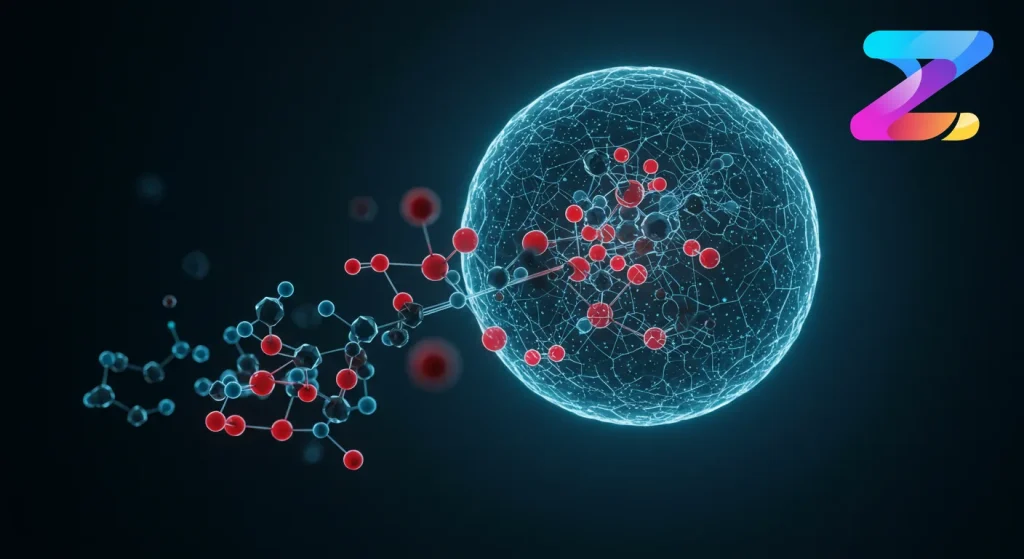
Pharma Researchers can now identify potent drug candidates from vast chemical libraries in days, rather than the months manual screening processes often demanded, by leveraging advanced artificial intelligence tools that perform competitive molecular docking. This capability is fundamentally reshaping how lead compounds are discovered and optimized, bringing unprecedented speed and precision to the earliest stages of drug development.
What has changed for the Pharma Researcher is a shift from merely predicting if a molecule *might* bind to a target, to understanding how effectively it will bind and exert its intended biological effect *in a competitive environment*. Traditional virtual screening methods often focus on static binding affinity, which can overlook crucial aspects like cellular concentrations of endogenous ligands or the presence of other potential binders. AI-guided competitive docking, however, simulates these dynamic interactions, offering a far more accurate prediction of a compound’s functional efficacy and selectivity. This means fewer false positives, a more focused experimental pipeline, and ultimately, a faster route to promising drug candidates. The adoption of artificial intelligence tools is transforming preliminary screenings from a labor-intensive bottleneck into a rapid, high-throughput funnel.
This sophisticated approach allows a Pharma Researcher to explore a significantly larger chemical space with higher confidence, dramatically reducing the guesswork and resource expenditure associated with early-stage compound selection. By quickly sifting through millions or even billions of potential molecules, AI tools for pharma researchers can pinpoint those with optimal competitive binding profiles, leading to more effective and safer therapeutics. The precision offered by pharmaceutical AI in predicting these complex molecular dance-offs is a significant leap forward for drug discovery AI.
Before AI-guided competitive docking, a Pharma Researcher attempting to identify novel inhibitors for a specific enzyme might have spent weeks analyzing static docking poses and affinity scores for a few thousand compounds using traditional computational chemistry software. This often involved laborious manual inspection of molecular structures, filtering based on simple binding energy thresholds, and then embarking on a costly, iterative cycle of synthesizing and experimentally testing hundreds of candidates. The process was sequential, resource-intensive, and prone to selecting compounds that looked good *in silico* but failed in biological assays due to poor competitive performance.
After adopting AI-guided competitive docking, that same Pharma Researcher can feed libraries of millions of compounds into systems that predict not just binding, but also competitive displacement and functional efficacy against a target, considering multiple interaction scenarios. These advanced AI tools can process massive datasets and identify a prioritized list of a few dozen high-confidence candidates with superior competitive binding characteristics within a few days. This dramatically reduces the number of compounds requiring experimental validation, saving immense time and resources, and allowing the Pharma Researcher to focus on optimizing truly promising leads.
The tools making this possible include platforms like Schrödinger, which has integrated advanced machine learning and AI algorithms into its computational chemistry suite to enhance docking accuracy and throughput. Schrödinger’s modules can now perform more sophisticated simulations that account for competitive ligand binding, providing a Pharma Researcher with deeper insights into molecular interactions. Another significant player is Atomwise, whose AtomNet platform leverages deep learning to predict binding affinities and identify novel lead candidates from vast chemical libraries, effectively performing high-throughput virtual screening with an emphasis on biologically relevant interactions. Companies like Insilico Medicine are also at the forefront, using generative AI and reinforcement learning to design novel molecules from scratch, which can then be evaluated through AI-guided competitive docking for their efficacy, pushing the boundaries of biotech AI and creating entirely new avenues for drug discovery. These artificial intelligence tools represent the cutting edge of modern pharmaceutical research.
To start leveraging these capabilities this week, a Pharma Researcher should first explore the commercial AI tools available for virtual screening and docking. Many platforms offer educational resources, webinars, or even trial access to demonstrate their features, allowing you to assess their relevance to your current projects. Secondly, identify a specific bottleneck or a project in your lead identification pipeline where enhanced virtual screening could provide immediate value. Begin with a focused, manageable dataset or a well-defined target to test the waters and gain practical experience. Finally, connect with vendors or engage with computational chemistry experts who have experience implementing these AI-driven workflows. Their guidance can be invaluable for integrating these powerful AI tools into your existing research infrastructure and optimizing their use for your specific needs.
Bottom Line: AI-guided competitive docking offers Pharma Researchers unparalleled speed and accuracy in predicting compound efficacy, fundamentally accelerating drug discovery. Embracing these advanced AI tools is no longer optional but a critical component for maintaining a competitive edge in pharmaceutical research.
See Zekai first in Google
The weekly AI briefing for your profession
One weekly email: the AI changes that actually affect your profession — tools, deals, and what to do about them.