العربية
 English
 Français
 Deutsch
 हिन्दी
 Português
 Русский
 Español
 Türkçe
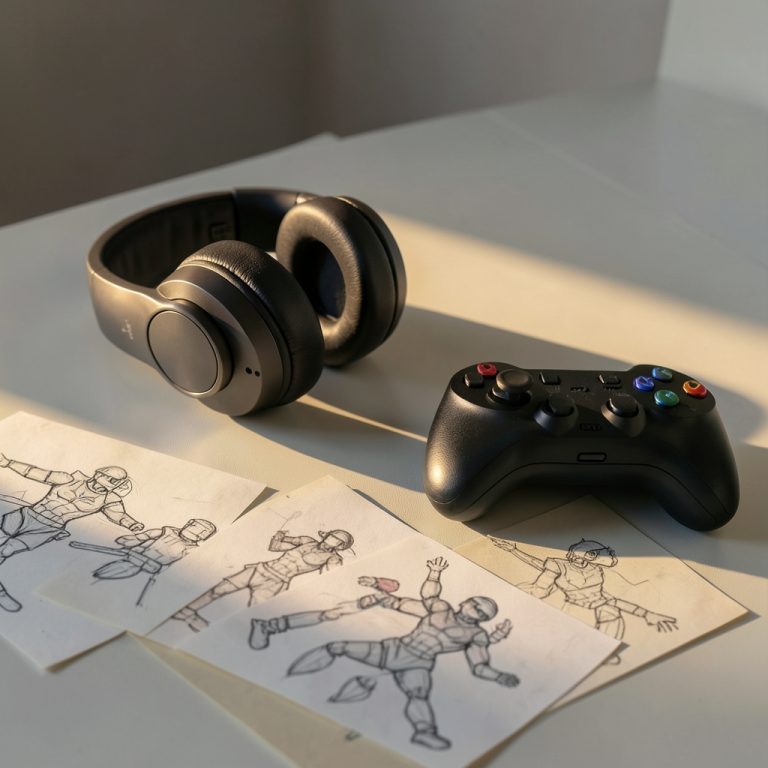
What used to take a Game Developer hours or even days to generate a complete set of thematic concept art or character variations can now be achieved in mere minutes. This isn’t just about speed; it’s about unlocking a new level of creative iteration and exploration previously constrained by time and resources. This significant shift empowers individual creators and large studios alike to rapidly prototype, visualize, and refine their artistic visions with an efficiency that redefines the initial phases of game production.
The recent unveiling of Ludo.ai’s API and Multi-Content Pipeline (MCP) Beta marks a pivotal moment for Game Developers. It signifies the maturation of AI tools from intriguing standalone experiments to deeply integrated, customisable components of the game development workflow. For too long, the barrier to quickly generating diverse visual assets—whether it’s creature concepts, environmental props, or UI elements—has been a bottleneck, often requiring significant artistic investment or costly outsourcing. Now, with Ludo.ai’s new capabilities, game AI is stepping out of the conceptual realm and into the practical, daily operations of asset creation. This means Game Developers can feed their high-level game design ideas directly into an AI system and receive a multitude of visual interpretations almost instantly, dramatically accelerating the ideation and pre-production phases. The ability to programmatically request and manage these assets opens up vast possibilities for procedural generation AI, making content creation more dynamic and responsive to design changes.
Consider a common scenario in game development: crafting a new enemy type with several visual evolutions based on player progression. Before Ludo.ai’s API/MCP: A Game Developer would typically brief a concept artist on the core idea (e.g., ‘a crystal-infused desert scorpion, evolving with more prominent crystalline growths’). The artist would then spend hours, often a full day or more, sketching initial concepts, refining them through feedback loops, and producing 2-3 distinct variations. This manual process could stretch over several days, incurring significant time and cost, and often limiting the number of variations explored. After: The Game Developer integrates Ludo.ai’s API into their concepting tool or a custom script. They input a detailed prompt for the crystal scorpion, specifying parameters for size, crystalline density, and evolution stages. Within minutes, Ludo.ai’s MCP generates dozens of high-quality, distinct concept art variations, complete with different crystal formations and body structures, ready for immediate review and selection. This transforms days of iterative artistic work into a rapid, automated discovery process, allowing the Game Developer to explore a far wider creative spectrum with unprecedented speed.
Ludo AI itself has been a recognized artificial intelligence tool for game designers, known for its ability to generate game concepts and ideas from simple prompts. With its new API, Ludo.ai transcends its role as a concept generator, becoming a powerful engine for programmatic asset creation. This allows studios to embed Ludo.ai’s generative capabilities directly into their existing pipelines, whether that’s for rapid concept art, texture variations, or even foundational elements for 3D modeling. Complementing this are tools like G3D.AI, which focuses on transforming 2D inputs or text prompts into preliminary 3D assets, further streamlining the transition from concept to game-ready models. While Unity Muse offers in-engine AI content creation and iteration, Ludo.ai’s API and MCP provide the upstream content generation, feeding a broader array of visual ideas into the development process before refinement in engine, making these AI tools for game developers a formidable combination.
Any Game Developer can begin harnessing these capabilities this week. First, explore Ludo.ai’s API documentation and beta program signup to understand the specific endpoints and data structures available. Familiarize yourself with how you can make requests and receive generated assets. Second, identify a specific, repetitive asset creation task within your current project—perhaps generating variations for environmental props, character costumes, or even UI iconography. This focused approach will provide a clear use case for testing the AI’s efficacy. Third, start with a small, manageable integration. Even a simple script that calls the Ludo.ai API to generate concept art based on a text file of prompts can offer immediate insights into the power of these artificial intelligence tools. Don’t aim for a complete pipeline overhaul initially; focus on augmenting a single, high-friction workflow.
The bottom line for Game Developers is that AI-powered asset generation is no longer just a standalone tool but is becoming an integral, customizable part of game development pipelines. This enables unprecedented speed, creative freedom, and iteration capabilities, ultimately allowing every Game Developer to bring richer, more diverse worlds to life faster than ever before.
See Zekai first in Google
The weekly AI briefing for your profession
One weekly email: the AI changes that actually affect your profession — tools, deals, and what to do about them.