العربية
 English
 Français
 Deutsch
 हिन्दी
 Português
 Русский
 Español
 Türkçe
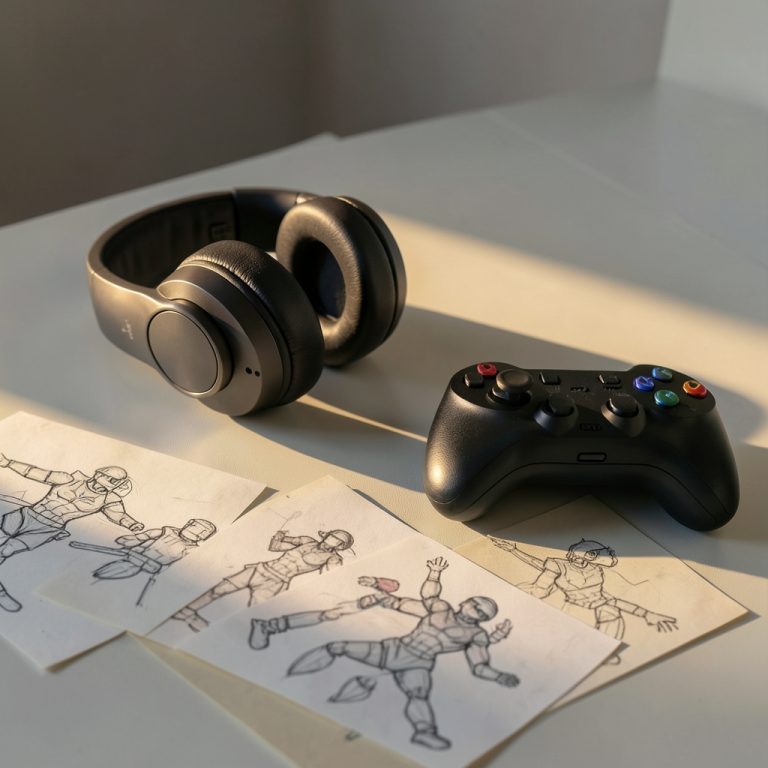
The latest “Patch Notes #52” highlight a significant industry pattern: video game hardware has reached unprecedented performance levels, with powerful new consoles and GPUs now standard. This surge in hardware capability means that the fidelity, scale, and dynamic nature of games are expected to “scream” with detail and complexity, signaling a future where advanced artificial intelligence tools are not just an advantage, but a necessity for Game Developers to meet escalating expectations.
The era of “hardware screaming now” translates directly into soaring demands on Game Developers across every discipline. Artists are tasked with creating increasingly intricate models and high-resolution textures, level designers must craft expansive and believable worlds, and programmers are challenged to build sophisticated systems that bring these environments to life with dynamic interactions and believable characters. This exponential growth in content requirements often leads to production bottlenecks, extended development cycles, and increased costs, especially for smaller studios striving to compete with AAA titles that leverage massive teams.
For Game Developers, this trend means a fundamental shift in how games are conceived, designed, and executed. The traditional handcrafted approach, while invaluable for unique artistic vision, struggles to keep pace with the sheer volume of assets and intelligent systems required for modern titles. This is where gaming AI steps in as a critical enabler. It offers a pathway to automate repetitive tasks, accelerate content generation, and empower designers to iterate faster on complex ideas. From procedural world generation to dynamic lighting systems, AI tools for game developers are becoming indispensable for bridging the gap between hardware potential and development capacity.
This paradigm shift isn’t about replacing human creativity but augmenting it. Game Developers can offload the grunt work to artificial intelligence tools, freeing up valuable time and resources to focus on innovative mechanics, deeper narratives, and unique player experiences that truly differentiate their titles. Understanding and integrating these AI tools into existing workflows will soon be a core competency for any professional Game Developer aiming to thrive in this technologically accelerated landscape, ensuring their projects fully exploit the raw power that contemporary hardware now delivers.
To navigate this evolving landscape, Game Developers need to familiarize themselves with powerful artificial intelligence tools designed specifically for their needs. Tools like Promethean AI are transforming environment creation, allowing artists to rapidly prototype entire worlds, generate complex scenes, and iterate on designs with unprecedented speed. By simply describing desired biomes or architectural styles, Game Developers can receive intelligent suggestions and automatically populated scenes, dramatically cutting down on manual asset placement and world-building time.
For character and NPC intelligence, solutions such as Inworld AI offer robust frameworks for creating dynamic, conversational characters that can react contextually, remember past interactions, and drive narrative forward. This capability goes far beyond traditional finite-state machines, enabling truly emergent AI NPC generation that enhances immersion and replayability. Furthermore, NVIDIA ACE (Avatar Cloud Engine) provides an end-to-end platform for building and deploying realistic, interactive AI-powered digital humans, integrating speech AI, natural language understanding, and animation. These examples showcase how dedicated AI tools are not just streamlining production but also unlocking entirely new possibilities for interactive storytelling and dynamic gameplay experiences for Game Developers.
Industry leaders are observing this pivot with keen interest, emphasizing the strategic importance of AI adoption for Game Developers. “The era of handcrafted everything is slowly fading as hardware demands scale,” says Dr. Anya Sharma, Lead AI Architect at Quantum Games. “Game Developers need to embrace artificial intelligence tools not as a replacement for creativity, but as an amplifier, freeing them to focus on unique gameplay mechanics and narrative design. Those who adapt quickly will define the next generation of interactive entertainment.” She further notes that the perceived barrier to entry is lowering rapidly, making these sophisticated AI tools accessible to a broader range of studios. The consensus among forward-thinking professionals is that neglecting AI game development risks being outpaced by competitors who leverage these efficiencies and creative possibilities.
For Game Developers eager to integrate artificial intelligence tools into their workflow, several concrete steps can be taken immediately. First, dedicate time to researching specific AI tools for game developers that align with your current project needs; this might involve exploring trial versions of tools like Promethean AI or Inworld AI, or delving into documentation for Unity AI if you’re working within that engine. Familiarize yourself with their core functionalities through tutorials and community forums to understand their practical applications.
Second, pick a small, manageable task within an existing project or create a mini-project specifically for experimentation. For example, try using an AI tool to generate variations of a specific texture, automate a repetitive animation cycle, or prototype dialogue for a minor NPC. This hands-on approach allows you to understand the tool’s strengths and limitations in a real-world context without disrupting critical development paths, building confidence and gaining practical experience with AI for game development.
Finally, engage with the growing community of Game Developers who are already using artificial intelligence tools. Attend online webinars, join Discord servers dedicated to AI in gaming, or watch GDC talks on AI topics. Learning from the experiences of others, understanding common pitfalls, and discovering best practices will accelerate your adoption curve and help you identify the most impactful ways to weave gaming AI into your development pipeline, ensuring you’re not just adopting technology, but mastering its application for game development.
The trajectory is clear: the escalating demands of cutting-edge hardware necessitate the strategic adoption of AI tools for game development. Game Developers who proactively integrate these powerful artificial intelligence tools into their workflows will not only meet future challenges but also unlock new creative frontiers, solidifying their position in an ever-evolving industry and delivering experiences that truly “scream” on modern hardware.
Frequently Asked Questions
How will AI impact my creative role as a Game Developer?
AI tools aim to augment, not replace, human creativity, automating repetitive tasks so Game Developers can focus on innovative design and narrative. It enables faster iteration and the exploration of more complex ideas, enhancing the creative process.
Are AI tools for game development affordable for indie studios?
Many AI tools offer flexible pricing, including free tiers or subscription models, making them increasingly accessible to indie Game Developers. The return on investment often outweighs the cost by significantly accelerating development and reducing manual labor.
What specific skills should Game Developers focus on to leverage AI effectively?
Game Developers should cultivate a strong understanding of prompt engineering, data curation, and workflow integration for AI tools. Analytical thinking, problem-solving, and a willingness to experiment with new technologies will be crucial for success.
See Zekai first in Google
The weekly AI briefing for your profession
One weekly email: the AI changes that actually affect your profession — tools, deals, and what to do about them.