العربية
 English
 Français
 Deutsch
 हिन्दी
 Português
 Русский
 Español
 Türkçe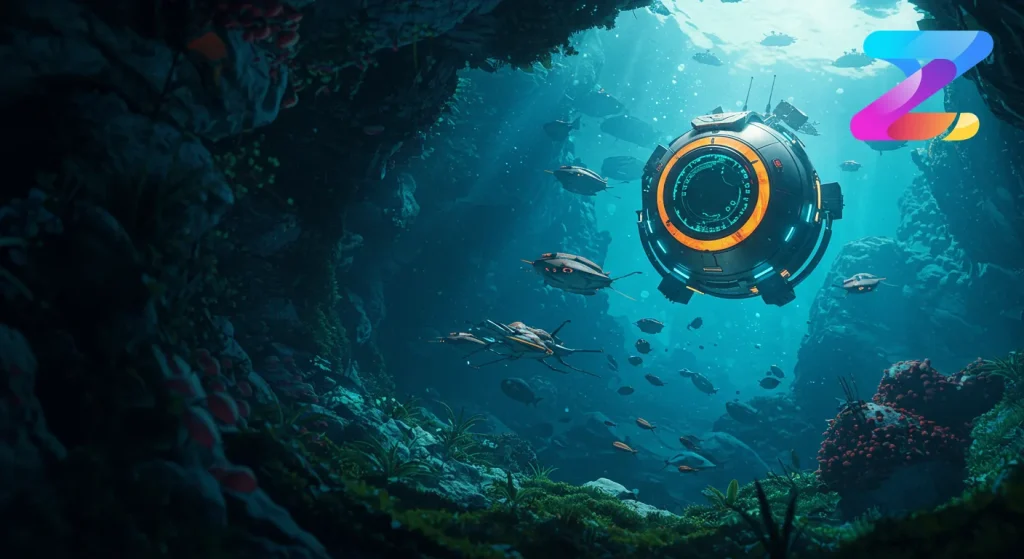
Subnautica 2, the highly anticipated sequel, quickly achieved a remarkable milestone, selling over 2 million copies within just 12 hours of its early access launch. This immediate market validation, coupled with concurrent players exceeding 651,000 across platforms, highlights the immense potential for games that resonate deeply with their audience.
For many game developers, achieving this level of rapid market penetration feels like a distant dream, often overshadowed by the realities of tight budgets, lengthy development cycles, and the constant pressure to innovate. Subnautica 2’s success isn’t just about a strong IP; it’s a testament to delivering a compelling experience that meets player expectations head-on, even amid a high-profile launch. The key takeaway here for game developers isn’t just to make a great game, but to consider how modern development strategies and artificial intelligence tools can accelerate production, enhance quality, and ultimately, get your game into players’ hands faster and more polished.
The ability to iterate quickly, generate vast amounts of content, and fine-tune player experiences can significantly reduce time-to-market and increase the likelihood of hitting a critical mass of players early on. This is where the power of AI tools for game developers truly comes into play. By automating repetitive tasks and assisting in creative processes, studios can free up valuable human resources, allowing artists, designers, and programmers to focus on higher-level innovation and problem-solving, rather than getting bogged down in manual grunt work.
Several cutting-edge AI tools are already transforming how game developers approach production. For instance, Inworld AI is making waves in AI NPC generation, allowing developers to craft dynamic, context-aware characters that can engage in natural, unscripted conversations. This not only deepens player immersion but dramatically cuts down on the manual writing and branching dialogue trees typically required, saving countless hours for narrative designers and writers. Similarly, Promethean AI offers a powerful solution for world-building and environment design, enabling artists to quickly populate scenes, generate variations of assets, and rapidly prototype level layouts. These tools, among others, exemplify how gaming AI is evolving from a niche concept to a mainstream asset that can directly impact a game’s scope, quality, and development timeline.
The integration of artificial intelligence tools is becoming less of an option and more of a strategic advantage for game developers aiming for efficiency and market impact. Sarah Chen, Lead Designer at Quantum Forge Studios, notes, “The success of titles like Subnautica 2 underscores the immense pressure on game developers to deliver polished experiences rapidly. AI game development isn’t about replacing human creativity; it’s about augmenting it, allowing us to prototype faster and focus our talent on truly innovative gameplay that truly captivates audiences.” This perspective highlights that AI’s primary role is to empower human creativity, not diminish it.
For game developers looking to harness these advantages, getting started this week is more accessible than you might think. First, identify a specific bottleneck in your current workflow—perhaps it’s asset generation for environments, or the time-consuming process of scripting NPC dialogues. Pinpointing this area will help you choose the most impactful AI tool to experiment with.
Next, explore trials or free tiers of relevant AI tools. For example, if NPC interaction is your focus, try out a basic integration with Inworld AI’s free plan to create a conversational prototype. If environmental design is the hurdle, look into the capabilities of tools like Promethean AI for rapid scene assembly. Focusing on a small, contained proof-of-concept will allow you to quickly assess its value without a significant upfront investment.
Finally, engage with the growing community of game developers who are already using AI. Many online forums, Discord servers, and GDC talks (accessible via GDC Vault) are dedicated to discussing the practical applications of AI in game development. Learning from others’ experiences and sharing your own will accelerate your understanding and adoption of these powerful new workflows.
The rapid success of titles like Subnautica 2 serves as a clear indicator of a hungry market for high-quality, engaging experiences. By strategically integrating AI tools, game developers can streamline their processes, unlock new creative potential, and ultimately position their projects for similar market traction and critical acclaim in an increasingly competitive industry. The future of AI game development is about working smarter, not just harder.
Frequently Asked Questions
How can AI tools specifically help indie game developers with limited resources?
AI tools can significantly aid indie game developers by automating repetitive tasks like asset generation or NPC dialogue, freeing up limited resources. This allows small teams to achieve a scope and polish typically associated with larger studios.
Are there any free or affordable AI tools for game developers to experiment with?
Yes, many AI tools offer free tiers, trial periods, or community editions that game developers can use to experiment. Tools like Inworld AI for NPCs or various open-source AI models for asset generation are good starting points.
What’s the biggest misconception game developers have about integrating AI into their workflow?
The biggest misconception is often that AI will replace human creativity or jobs. In reality, AI tools are designed to augment and accelerate human creative processes, allowing game developers to focus on innovation and higher-level design tasks.
See Zekai first in Google
The weekly AI briefing for your profession
One weekly email: the AI changes that actually affect your profession — tools, deals, and what to do about them.