العربية
 English
 Français
 Deutsch
 हिन्दी
 Português
 Русский
 Español
 Türkçe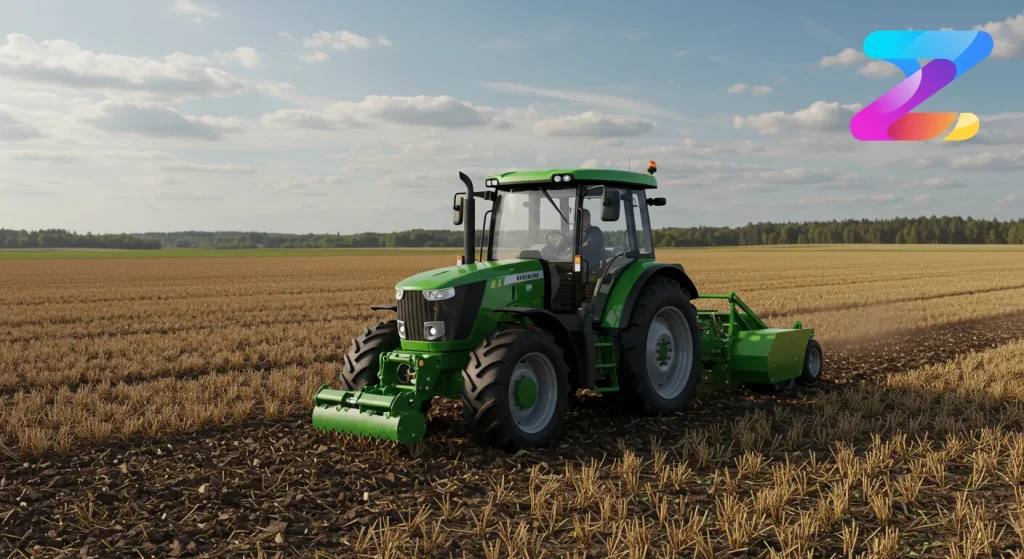
Farmers are now seeing an average reduction in input costs by 15-20% simply by integrating advanced GPS guidance into their tractor operations. This capability, once considered cutting-edge, is rapidly becoming a fundamental aspect of efficient farm management, directly impacting the bottom line for every Farmer. It’s about more than just staying straight; it’s about making every pass count, precisely.
For decades, farming relied heavily on a Farmer’s skill and intuition to navigate fields, especially when planting, spraying, or fertilizing. The challenge was always maintaining consistent spacing and avoiding overlaps or skips, which directly translate to wasted resources or subpar crop development. Even the most experienced Farmer would face fatigue, varying soil conditions, and visual limitations, making perfect field coverage an elusive goal. This manual approach meant making educated guesses about seed density, fertilizer distribution, and pesticide application, leading to inefficiencies that accumulated significantly across vast acreage.
The fundamental shift brought by GPS systems for tractors is the elimination of this guesswork. Farmers can now pre-map their fields with incredible accuracy, allowing the tractor to follow precise, repeatable paths year after year. This isn’t just about steering; it’s about applying inputs exactly where and when they’re needed. The implications for fuel consumption are immediate, as fewer corrective steering inputs and optimized turning patterns reduce operational time and unnecessary engine hours. Moreover, the ability to apply seeds, fertilizers, and pesticides with millimeter-level accuracy means less waste, healthier crops, and a significantly reduced environmental footprint. This transformation is a cornerstone of modern precision agriculture, moving away from broad applications to highly targeted interventions that are driven by data and smart farming principles. The integration of artificial intelligence tools further enhances these systems, turning raw GPS data into actionable insights for the Farmer.
Consider the daily grind of a Farmer preparing a field. Before advanced GPS, a Farmer preparing a 100-acre corn field for planting might spend 10 hours navigating manually. This process involved constantly judging distances, looking for markers, and making countless small steering corrections, often leading to fatigue. Despite best efforts, there would inevitably be areas with slight overlaps, consuming extra seed and fertilizer, or small skips where no input was applied, impacting yield potential. Fuel consumption would be higher due to inefficient turns and repeated passes over sections. The constant mental focus required was draining, leaving the Farmer with less energy for other critical farm management tasks.
After integrating a GPS auto-steer system into that same tractor, the Farmer’s workflow changes dramatically. The initial field mapping might take a short setup, but then the system takes over the steering. That same 100-acre field can now be prepared in just 7 hours, with an estimated 5-7% reduction in fuel consumption and a consistent 98% field coverage efficiency. The tractor travels in perfectly straight lines, making precise turns at the end of each pass. The Farmer, while still present and monitoring, is freed from the strenuous task of steering, allowing them to focus on planter performance, equipment maintenance, or even reviewing crop management AI data on a tablet. This not only saves time and inputs but also significantly reduces operational stress and fatigue, allowing the Farmer to make more strategic decisions throughout the day.
The backbone of this transformation lies in robust GPS guidance systems. Manufacturers like John Deere with their StarFire receivers, Trimble, and Raven offer highly accurate GPS steering solutions, some capable of sub-inch precision. These systems aren’t just standalone units; they are increasingly integrated with broader AI tools for farmers and precision agriculture platforms. For example, the GPS data collected during planting or spraying can be seamlessly fed into platforms like Climate FieldView. This allows a Farmer to visualize yield maps, analyze application rates, and compare field performance across seasons, identifying precise areas for improvement.
Beyond basic guidance, tools like CropX leverage the precision data to inform irrigation and nutrient management decisions, using soil sensor data in conjunction with GPS-tracked application. Granular provides a holistic farm management suite where the efficiency gains from GPS-guided operations can be tracked and optimized across an entire enterprise. While aWhere focuses more on weather and climate intelligence, even their insights become more actionable when a Farmer knows precisely where inputs are being applied. FarmLogs offers simpler field mapping and record-keeping, perfectly complementing the data generated by a GPS-equipped tractor, helping a Farmer understand the true cost savings and yield improvements from their smart farming efforts. These artificial intelligence tools don’t just guide the tractor; they help the Farmer make smarter, data-driven decisions that impact every aspect of crop management.
Getting started with GPS guidance for your tractor doesn’t have to be an overwhelming overhaul. First, assess your current equipment. Many newer tractors are “guidance-ready,” meaning they have the necessary wiring and hydraulics for a simple plug-and-play installation of a GPS receiver and display unit. Even older models can often be retrofitted, so check with your local equipment dealer about compatibility and options. Second, research entry-level GPS guidance systems or auto-steer options that fit your budget and farm size. You might not need sub-inch RTK accuracy immediately; even basic lightbar guidance can offer significant improvements over manual steering. Focus on systems known for their reliability and user-friendliness. Many dealerships offer demonstrations or trials, allowing you to experience the benefits firsthand. Finally, begin to explore how this precision data can integrate with your existing farm management software or consider adopting a new platform designed for smart farming. Start by simply recording field boundaries and application maps, gradually building up to more complex data analysis with AI tools. The key is to start small, learn as you go, and witness the immediate benefits of enhanced precision.
Embracing GPS systems for tractors represents a pivotal moment for any Farmer seeking to optimize operations and boost profitability. The immediate return on investment from optimizing input use and reducing operational fatigue makes adopting this technology a foundational step for enhancing a farm’s efficiency and sustainability today.
See Zekai first in Google
The weekly AI briefing for your profession
One weekly email: the AI changes that actually affect your profession — tools, deals, and what to do about them.