العربية
 English
 Français
 Deutsch
 हिन्दी
 Português
 Русский
 Español
 Türkçe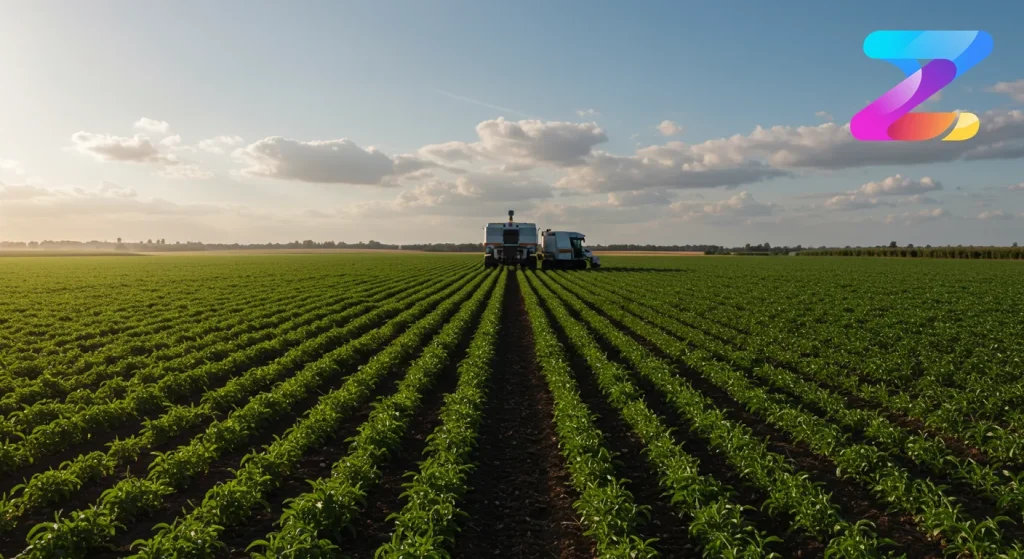
Farmers can now synthesize complex environmental, soil, and market data into actionable, personalized management insights in under an hour, a process that once consumed days of manual research and consultation. This breakthrough in artificial intelligence tools offers a new level of clarity and efficiency, allowing Farmers to make more informed decisions rapidly.
The shift comes from applying large language models (LLMs) to farm management, but critically, with a human-in-the-loop approach. This means the AI doesn’t just make decisions autonomously; it acts as a powerful analytical partner, sifting through vast amounts of information – everything from hyper-local weather forecasts and historical yield data to soil nutrient reports and commodity market trends. For a Farmer, this transforms the daily grind of information gathering and analysis. Instead of spending hours cross-referencing disparate data sources or waiting for an agronomist’s visit, they can get highly contextualized summaries and recommendations almost instantly. It’s about moving from reactive problem-solving to proactive optimization, enhancing every aspect of precision agriculture.
What this fundamentally changes for the Farmer is the ability to leverage their invaluable on-the-ground experience with an unprecedented depth of analytical power. Imagine a complex crop management AI scenario where a specific field is showing unusual stress. Traditionally, the Farmer would observe, then consult a series of resources: checking soil moisture with a probe, reviewing recent rainfall data, looking up pest and disease commonalities for their crop type and growth stage, perhaps calling a seed representative or extension agent. Each step takes time and expertise to interpret. With AI tools for farmers, this entire process is streamlined. The LLM can ingest all available data points—field imagery, soil sensor data, weather patterns, historical input logs, even market forecasts for the affected crop—and then, under the Farmer’s guidance, offer a range of probable causes, potential impacts, and recommended solutions, complete with justifications based on the integrated data. This level of smart farming insight empowers the Farmer to act quickly and decisively, minimizing losses and optimizing outcomes.
Before this integrated approach, a Farmer facing an unexpected crop issue might endure a workflow like this:
Before AI-enhanced insight: A Farmer notices patchy discoloration in a cornfield. They spend the better part of a day walking the affected rows, taking notes, digging up roots, and checking for pests. Over the next two days, they might consult university extension guides, call an agronomist, and review detailed fertilizer application records. Getting a solid hypothesis and an actionable plan for intervention could easily take 3-5 days, during which time the problem might worsen.
After: The Farmer inputs their observations and uploads geotagged photos of the affected area into an AI tool that integrates with their existing precision agriculture platform. This tool, powered by an LLM, instantly cross-references the symptoms with historical data from that specific field, regional disease patterns, recent weather events, and nutrient application records. Within an hour, the AI presents several probable causes (e.g., specific nutrient deficiency exacerbated by recent heavy rain, or an early-stage fungal infection), along with recommended diagnostic steps and potential treatment options, tailored to their farm’s specific parameters. The Farmer, reviewing these insights, uses their knowledge to refine the diagnosis and quickly implement the most appropriate strategy.
The tools making this possible are often existing precision agriculture platforms that are now integrating advanced artificial intelligence tools. Companies like CropX, Climate FieldView, and FarmLogs, which already excel at collecting and visualizing vast amounts of field-level data—from soil moisture and nutrient levels to planting dates, yield maps, and weather history—are now poised to be enhanced by LLM capabilities. These LLMs don’t replace the data collection or visualization; instead, they act as an intelligent layer on top, translating raw numbers and sensor readings into understandable, context-rich narratives and actionable recommendations. Imagine your existing data dashboard, but instead of just seeing graphs, you can ask it complex questions in natural language and receive comprehensive, nuanced answers that factor in variables across your entire operation. Granular and aWhere, with their focus on operational efficiency and environmental intelligence, are also prime candidates for such enhancements, making their robust data even more immediately useful for strategic decision-making in crop management AI.
To start leveraging this kind of insight this week, Farmers have a few concrete steps they can take. First, ensure your farm data is as digitized and centralized as possible. Whether you use Climate FieldView, FarmLogs, or another system, consistent data input on everything from planting and spraying to harvest and soil sampling is crucial, as this data fuels the AI’s intelligence. Second, actively inquire with your current farm management software providers about upcoming or pilot programs featuring AI-enhanced analytics or natural language query capabilities. The industry is moving fast, and many are quietly testing these next-gen smart farming features. Finally, consider choosing one specific, recurring challenge on your farm—perhaps optimizing fertilizer application for a particular crop or predicting the likelihood of certain pest outbreaks—and dedicate time to exploring how existing data, even without full LLM integration yet, could inform a more precise strategy. This prepares you for the full potential of artificial intelligence tools when they become widely available.
The core takeaway is that these AI tools aren’t replacing the Farmer’s invaluable experience but enhancing it, providing deeper insights and more options at critical decision points. Farmers who embrace this human-in-the-loop approach will find their expertise amplified, leading to more resilient and profitable operations.
See Zekai first in Google
The weekly AI briefing for your profession
One weekly email: the AI changes that actually affect your profession — tools, deals, and what to do about them.