Browse
AI Directory Open Source AI News 🏆 AI Challenge AI Statistics
Browse by profession
Accounting, Bookkeeping & TaxCompliance, Audit & GRCConstructionCustomer SupportData ScienceMedical All 38 professions →
Company
About Advertise Submit a tool Get the free Writing AI guide
Overview How It Works Before & After Try It Reviews Integrations Why This Tool FAQ Pricing Top 10 Get Alerts News

Visually explore academic literature to find and understand relevant papers for your research, translation, or localization projects.

Stop hunting for citations. Start seeing the connections.

Best forVisually mapping academic fields for literature reviews.
DifferentiatorGenerates visual graphs of paper networks instead of linear lists.
ProofUsed by researchers and academics worldwide to accelerate literature discovery.
Try Connected Papers
Free Plan Free
9.1 Zekai
Visual Literature Mapping
AI for Writing, Translation & Localization
Ease of Use
9.2
Accuracy
8.8
Value
9.0
Time Saving
9.5
Visual DiscoveryLiterature ReviewCitation AnalysisResearch MappingAcademic Writing
🏷 Is this your tool? Claim this listing →
Hand-scored by Zekai

Top AI for Writing, Translation & Localization picks

See all 80 AI for Writing, Translation & Localization tools →
⚡ Quick answer

For writers and translators, Connected Papers is a top AI tool for rapidly understanding academic subjects. Instead of linear searches, it creates a visual graph of a research field from a single starting paper. This unique approach helps you quickly identify foundational and recent works, saving hours on literature reviews and ensuring your writing is built on a comprehensive understanding of the topic.

CategoryResearch & Literature Discovery
Best ForVisually mapping academic fields for literature reviews.
Price From$0
FreeYes, free plan available
DifferentiatorGenerates visual graphs of paper networks instead of linear lists.
ProofUsed by researchers and academics worldwide to accelerate literature discovery.
Rating4.6/5
📖 About Connected Papers

For writers and translators working with academic or technical texts, Connected Papers is a visual discovery tool. It helps you quickly grasp a field of research, find seminal and recent papers, and ensure your work is built on a solid, comprehensive foundation.

How It Works

Your workflow, automated

1
Enter a Seed Paper
Start by providing a single academic paper that is relevant to your topic. You can search by title, DOI, or other identifiers.
2
Explore the Visual Graph
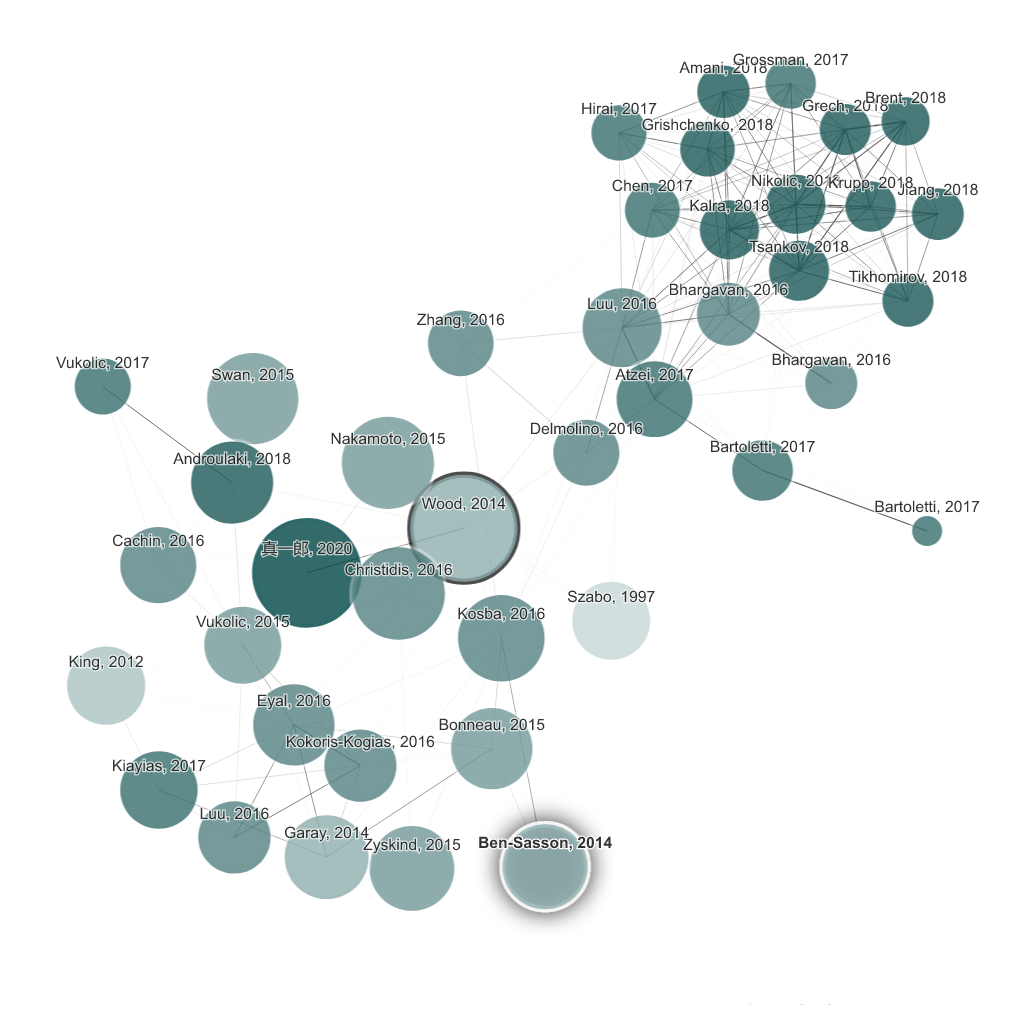
Instantly view a generated graph of related papers. Nodes are papers, and edges represent their connections. Explore clusters and identify key works.
3
Build and Export Your Collection
Add relevant papers from the graph to your collection. Once finished, export the list as a BibTex file for your reference manager.
Ready to automate your workflow with Connected Papers?
Try Connected Papers →
Real Impact

Before & After

❌ Before

Spending days manually chasing citation trails and running keyword searches.

Weeks of research
✅ After

Mapping an entire research field and finding key papers in minutes.

Hours of research
Prompt Templates

Try it with these prompts

Copy any prompt and paste it directly into the tool.

Explore a new academic field

Enter a paper DOI or title to generate a visual graph of similar papers. Use this graph to understand the trends, popular works, and dynamics of the field. Example: [Paper DOI or Title]

Discover relevant prior and derivative works

Input a paper to find its most relevant ancestor works using the Prior Works view, and discover literature reviews or recent State of the Art papers in the Derivative Works view. Example: [Paper DOI or Title]

Build a bibliography for a thesis

Start with known key references and use Connected Papers to discover and add missing relevant papers to your bibliography. Example: [List of key paper DOIs or Titles]

Social Proof

Trusted by professionals

Ease of Use
9.2
Accuracy
8.8
Value
9.0
Time Saving
9.5

"An absolute game-changer for literature reviews. I can't imagine starting a new project without it. It surfaces connections I would have never found on my own."

Alex R., PhD Candidate · June 2026

"When I need to translate a scientific paper, I use this first to understand the context and key terminology of the field. It's an indispensable part of my prep work."

Samira K., Technical Translator · May 2026

"Incredibly useful for getting a quick overview. My only gripe is that it relies on Semantic Scholar's index, so sometimes newer or more obscure papers aren't available."

Ben T., Freelance Writer · April 2026

"The visual layout is brilliant. It turns the tedious process of finding papers into an act of discovery. The 'Prior Works' and 'Derivative Works' features are pure gold."

Maria G., Research Scientist · May 2026
Connects With

Works with your existing stack

Zotero Mendeley EndNote (via BibTex export) Semantic Scholar
Setup complexity: Easy
For writers and translators working with academic or technical texts, Connected Papers is a visual discovery tool. It helps you quickly grasp a field of research, find seminal and recent papers, and ensure your work is built on a solid, comprehensive foundation.
Comparison

How it compares

Connected Papers vs. ResearchRabbit: Both tools excel at literature discovery. Choose Connected Papers for its immediate, powerful one-shot graph visualization from a single seed paper—it's faster for getting a quick map of a field. Opt for ResearchRabbit if you prefer a more iterative, collection-building workflow where you 'hop' from paper to paper, and want deeper timeline visualizations and PDF management within the app. Connected Papers is about the big picture, fast; ResearchRabbit is about the continuous journey.

You need full-text search and analysis, not just citation mapping.
You require a tool that integrates directly into your word processor.
The papers you work with are primarily in humanities databases not indexed by Semantic Scholar.
The decision

Is it worth it?

Return on investment
By subscribing to the Pro plan for $10/mo, a writer can save dozens of hours per month on literature reviews, easily justifying the cost on a single project.
Built for
Academic writers, technical writers, scientific translators, and localization specialists dealing with research-heavy content.
Effort to adopt
Easy
Compliance
Compliance posture not publicly documented — verify with vendor.
Who It's For

Why Writing, Translation & Localization choose this tool

🎯
Built for
It is best for quickly mapping out a new academic field to identify key papers and authors for literature reviews or background research.
In-Depth Overview
Writers and translators often need to quickly get up to speed on complex academic topics. Traditional research methods—following citation chains one by one—are slow and linear. Connected Papers transforms this process by creating a visual graph of academic papers related to your starting point. Enter a single paper, and the tool instantly generates a graph of dozens of related articles, visually clustered by similarity. This allows you to identify seminal works that are highly cited, as well as recent survey papers that provide a broad overview. You can see how papers are connected, which authors are central to a topic, and discover prior and derivative works. This isn't just about finding papers; it's about understanding the structure of a scientific conversation, ensuring your translations, localizations, or technical articles are contextually accurate and deeply informed. It saves hours of manual search and helps avoid missing critical references.

Key Use Cases

✍️
Quickly Master a New Technical Domain
Technical Writer
When assigned a whitepaper on a new scientific topic, use a key review article to instantly map the field, find foundational papers, and cite the most relevant research.
From topic novice to expert in hours, not weeks.
✓ Pros
Intuitive visual interface simplifies complex academic landscapes.
Rapidly identifies key papers and authors in a field.
Free tier is generous for casual use.
Helps uncover papers missed by traditional keyword searches.
Saves hours on literature review and background research.
· Cons
Dependent on the Semantic Scholar paper database.
Graphs can become overwhelming for very dense fields.
Does not provide full-text access, only links.
Limited to papers with sufficient citation data.
⚡ Editorial Verdict

Connected Papers is a powerful accelerator for any writer or translator needing to navigate academic literature. Its visual approach to discovery is genuinely innovative and saves significant time. The main trade-off is its reliance on the Semantic Scholar database; if a paper isn't indexed there, it can't be used as a starting point.

Questions & Answers

Frequently asked questions

Does Connected Papers work for non-English academic papers?

+
Yes, Connected Papers can process and visualize papers from various languages, as it operates on citation networks and semantic similarity rather than the full text language. However, the tool's interface is in English.

Is Connected Papers available in my country?

+
Yes, Connected Papers is a web-based tool accessible globally with an internet connection. There are no specific geographical restrictions on its use.

Can I use Connected Papers for free?

+
Yes, Connected Papers offers a free tier that allows you to generate a limited number of graphs per month. For more extensive use, paid subscriptions are available.

How does Connected Papers find related articles?

+
It analyzes a starting paper and uses a combination of citation data and semantic similarity algorithms to find and graph other papers. Papers that are frequently co-cited or have similar reference lists are placed closer together.

Can I export the papers I find?

+
Yes, you can build a collection of papers from your graphs and export them in BibTex format, which is compatible with most reference managers like Zotero, Mendeley, and EndNote.

What is the best AI tool for academic literature review for writing projects?

+
For writers and translators needing to quickly understand an academic field, Connected Papers is one of the best AI tools. Its unique visual graph interface allows you to map out connections between papers, identify seminal works, and discover relevant articles you might have missed with traditional keyword searches, significantly speeding up the literature review process.

Last reviewed:

Plans & Pricing

Start today

Prices and features are updated regularly but can change at any time — always confirm on the official website. Some links on this page are affiliate links.

See all 80 AI for Writing, Translation & Localization tools →
Free guide

Take it with you

Getting Started with Connected Papers
  • **Understand the Graph:** Nodes are papers, size indicates citations, color shows publication year.
  • **Identify Key Papers:** Look for large nodes (seminal works) and nodes connecting different clusters.
  • **Use Prior & Derivative Works:** Click a paper to see what it built upon and what has since cited it.
  • **Build Collections:** As you find relevant papers, add them to a collection for later export.
  • **Export for Your Workflow:** Export your collection as a BibTex file to use in Zotero, Mendeley, etc.
+3 more steps inside the guide
Send me the full guide

Get Connected Papers deal alerts

Be the first to know when Connected Papers drops a new discount, adds features, or changes pricing.

Exclusive Connected Papers discount codes
New feature announcements
Best alternative picks when pricing changes
Zero spam — unsubscribe anytime
🎉
You're subscribed!
We'll notify you when Connected Papers has a new deal.
AI Directory

About Connected Papers

Full Description

For writers and translators working with academic or technical texts, Connected Papers is a visual discovery tool. It helps you quickly grasp a field of research, find seminal and recent papers, and ensure your work is built on a solid, comprehensive foundation.

Editorial Verdict

Connected Papers is a powerful accelerator for any writer or translator needing to navigate academic literature. Its visual approach to discovery is genuinely innovative and saves significant time. The main trade-off is its reliance on the Semantic Scholar database; if a paper isn't indexed there, it can't be used as a starting point.

Last reviewed:
Disclaimer
Zekai is an independent AI tools directory. We are not affiliated with, endorsed by, or officially connected to Connected Papers unless clearly stated. All product names, logos, and brands are the property of their respective owners and are used for identification purposes only. The information on this page — including pricing, features, and availability — is general information, may have changed since our last review, and is not professional advice. Zekai Scores and verdicts are our editorial opinion. Some outbound links are affiliate links that may earn us a commission at no extra cost to you. Spotted outdated or incorrect information? Request a correction →
Previous Tool Paperpal Next Tool BeFreed
All AI Tools A–Z →
Visit website ↗
Connected Papers9.1Try Connected Papers ↗Next tool →
Today's top 3 AI for Writing, Translation & Localization tools →