العربية
 English
 Français
 Deutsch
 हिन्दी
 Português
 Русский
 Español
 Türkçe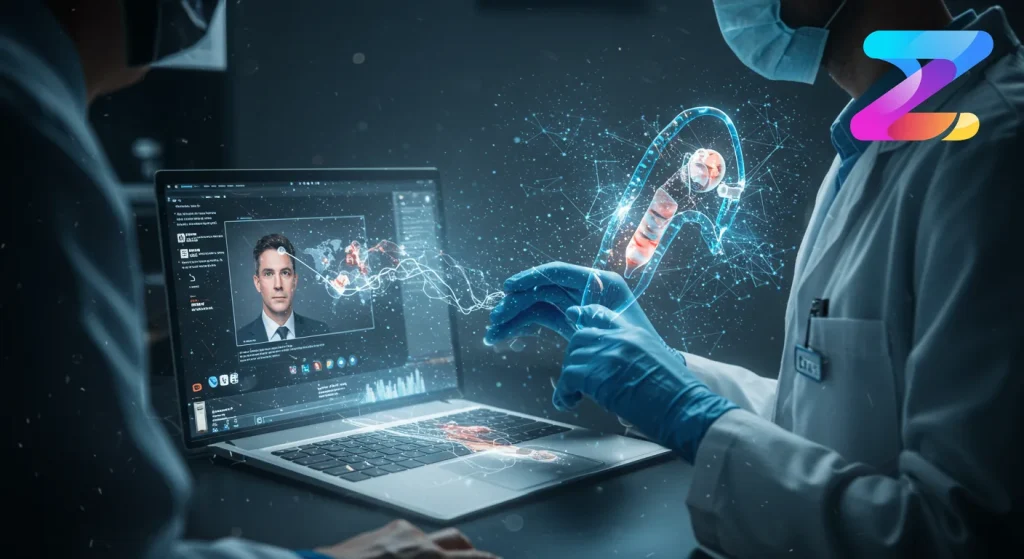
Doctors can now gain critical diagnostic insights and preliminary treatment pathways for rare or ambiguous conditions in less than five minutes, drastically cutting down the initial research time traditionally spent sifting through vast medical literature. This newfound speed and breadth of knowledge, powered by emerging artificial intelligence tools, is making high-quality diagnostic support accessible even in the most resource-constrained settings, directly impacting daily clinical practice.
The recent advancements in AI chatbots, particularly their ability to process and synthesize complex medical information rapidly, represent a fundamental shift for every practicing Doctor. Traditionally, facing a patient with atypical symptoms or a complex differential required significant mental bandwidth and often hours of research – consulting textbooks, sifting through journal articles, or reaching out to specialists. Now, these advanced AI tools for doctors are acting as powerful diagnostic co-pilots, capable of cross-referencing vast databases of medical knowledge, clinical guidelines, and even anonymized patient data in mere moments. This capability is especially transformative for a Doctor in underserved areas or those in general practice who frequently encounter conditions outside their immediate specialty.
This isn’t about replacing the Doctor’s clinical judgment; it’s about profoundly augmenting it. For a Doctor in a busy clinic, the ability to quickly generate a comprehensive differential diagnosis for a challenging case, complete with supporting evidence and relevant diagnostic next steps, means more time focused on patient interaction and less on information retrieval. These clinical AI systems are not just recalling facts; they are identifying patterns and correlations that might escape even the most experienced human mind, especially when dealing with rare conditions where diagnostic ambiguity is common. The result is a substantial reduction in the cognitive load, leading to more confident diagnostic decisions and potentially earlier, more effective interventions for patients. Moreover, by providing readily available, evidence-based insights, these artificial intelligence tools empower the Doctor to communicate more transparently and confidently with patients about complex conditions, fostering greater trust and adherence to treatment plans. This accessibility of advanced diagnostic support, once limited to academic centers, is democratizing complex medical insights for the front-line Doctor everywhere, improving the quality of care regardless of geographic or resource limitations.
Consider a Doctor presented with a patient exhibiting an unusual combination of neurological and dermatological symptoms, not immediately fitting a common disease profile.
Before: The Doctor would interview the patient, conduct a physical exam, and then embark on a manual diagnostic odyssey. This would involve searching PubMed, reviewing specialty-specific guidelines, potentially reaching out to a neurologist or dermatologist for an informal curbside consult, and painstakingly compiling a list of potential conditions and the tests needed to confirm or rule them out. This process could easily span several hours over multiple days, delaying definitive diagnosis and increasing patient anxiety.
After: The Doctor inputs the patient’s de-identified symptoms, relevant history, and initial findings into a secure, HIPAA-compliant medical AI platform. Within minutes, the AI generates a ranked differential diagnosis, highlights key diagnostic markers to look for, suggests a sequence of appropriate lab tests and imaging, and even points to recent literature on rare conditions matching the symptom profile. This allows the Doctor to present a more informed plan to the patient almost immediately, order the most targeted tests, and accelerate towards a diagnosis with significantly greater efficiency and precision.
While the news highlights “cheap AI chatbots,” the underlying technology refers to sophisticated large language models (LLMs) trained on extensive medical datasets. Specialized AI tools for doctors are now integrating these capabilities into secure, regulated environments. Companies like Google Health AI and DeepMind Health are at the forefront of developing the foundational models that power these diagnostic assistants, though their direct application often comes through more specialized, clinically validated platforms designed specifically for healthcare providers. For example, a Doctor might interact with a secure diagnostic support system that leverages a variant of Google’s medical LLMs, rather than a generic public chatbot. These platforms are meticulously designed to respect patient privacy, adhere to regulatory standards, and provide evidence-based suggestions, often citing their sources. Another example lies in specialized clinical decision support tools which, while not direct chatbots, utilize similar AI principles to flag potential issues in patient data. Just as Aidoc and Zebra Medical Vision revolutionize radiology by rapidly identifying anomalies in medical images, these newer healthcare AI systems apply similar pattern recognition to textual and symptomatic data, aiding general diagnosis. The goal isn’t just speed but also reducing diagnostic error, ensuring no critical information is overlooked, and providing comprehensive support to the Doctor when navigating complex clinical pathways. These artificial intelligence tools are being developed with integration into existing electronic health record (EHR) systems in mind, aiming to streamline workflow rather than add complexity.
A Doctor looking to harness these powerful AI tools for doctors can begin with actionable steps this week. First, prioritize education by exploring reputable, peer-reviewed sources on clinical AI and its practical applications in diagnosis, focusing on platforms that emphasize data security and clinical validation rather than experimental consumer-grade tools. Understanding the capabilities and limitations is key. Second, investigate and pilot a secure, privacy-compliant AI assistant or clinical decision support system within your practice, perhaps starting with its use in reviewing de-identified historical cases or for generating preliminary differential diagnoses for non-urgent, complex scenarios. This allows a Doctor to build familiarity and trust without immediate patient impact. Finally, integrate these AI tools incrementally into your workflow, perhaps initially using them as a second opinion for challenging cases or for rapid information retrieval on rare conditions, gradually expanding their role as you gain confidence in their accuracy and utility alongside your own clinical expertise.
The advent of sophisticated medical AI for diagnostic support is not a distant future but a present-day reality, fundamentally reshaping how a Doctor can approach complex cases. Embracing these artificial intelligence tools empowers clinicians to deliver faster, more informed, and ultimately better patient care with unprecedented efficiency.
See Zekai first in Google
The weekly AI briefing for your profession
One weekly email: the AI changes that actually affect your profession — tools, deals, and what to do about them.