العربية
 English
 Français
 Deutsch
 हिन्दी
 Português
 Русский
 Español
 Türkçe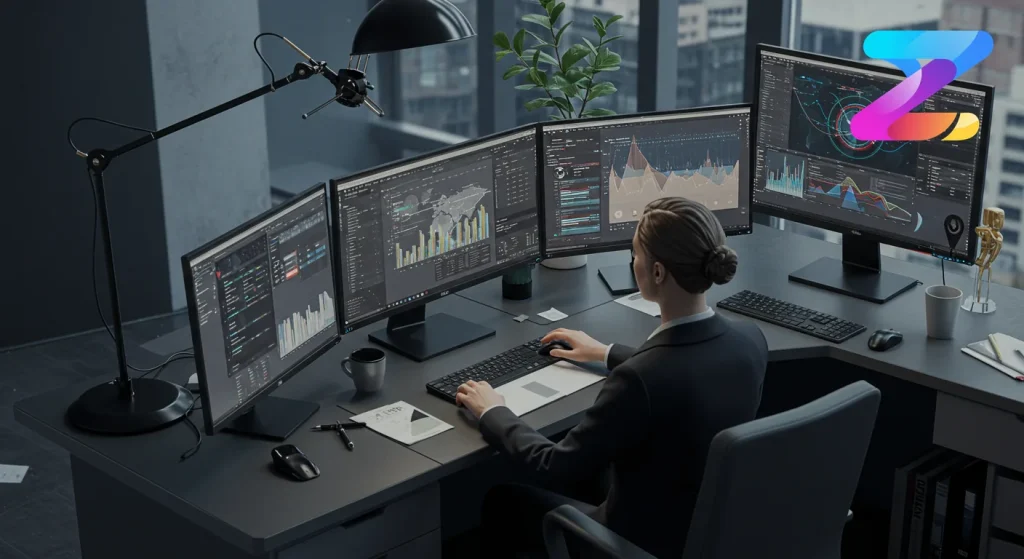
Pre-orders have opened for the ROG XREAL R1, a new pair of augmented reality smart glasses designed for high-frame-rate gaming, bundled with a ROG control dock. This development, while primarily entertainment-focused, underscores a larger industry trend toward highly portable, personalized virtual workspaces. This shift is poised to significantly impact how Executive Assistants manage daily tasks and information, hinting at a future where digital environments are no longer confined to physical screens.
The introduction of devices like the ROG XREAL R1, projecting a virtual 171-inch monitor in augmented reality, offers a glimpse into a future where Executive Assistants can transcend physical desk space limitations. Imagine managing multiple dashboards, sensitive documents, and communication platforms simultaneously within a private, expansive virtual display that follows you. This customizable and secure display real estate could redefine how Executive Assistants handle complex projects and confidential data, allowing for unparalleled focus and discretion regardless of their physical location.
The core technology behind these glasses—particularly the three degrees of freedom (3DoF) tracking that pins a display anywhere in your AR environment—suggests a future where wearable tech acts as a seamless extension of a personal AI assistant. For Executive Assistants, this could translate into an always-on, personalized interface displaying real-time updates on executive schedules, immediate document access, or discreet prompts during presentations. Such advancements pave the way for more integrated workflow management and deeper engagement with sophisticated AI tools for executive assistants, capable of processing, summarizing, and anticipating needs within dynamic, immersive environments.
While full AR integration for professional tasks is still evolving, Executive Assistants can already leverage powerful AI productivity tools to streamline their work and prepare. Microsoft Copilot, embedded within familiar applications like Outlook and Teams, can significantly reduce administrative overhead by drafting emails, summarizing documents, generating meeting notes, and intelligently managing calendars based on natural language prompts. Similarly, specialized AI scheduling tools like Motion or Reclaim AI can optimize complex schedules, freeing up Executive Assistants for higher-level strategic support.
These artificial intelligence tools represent foundational steps toward a future where a personal AI assistant operates seamlessly within an augmented workspace. By automating routine processes and providing intelligent insights, they empower Executive Assistants to manage information overload and complex coordination with greater ease. Becoming proficient in these current AI tools for executive assistants not only boosts immediate productivity but also builds a crucial skill set for navigating the next generation of digital work environments, where information will be delivered and interacted with in entirely new ways.
Industry observers note that the trajectory of AR technology, even in its gaming-centric applications, signals a broader shift in human-computer interaction and workplace design. The ROG XREAL R1’s ability to create a virtual 171-inch screen with a 0.01ms response time and 240Hz refresh rate demonstrates the increasing fidelity of these immersive interfaces. “We’re moving towards an era of personalized and pervasive computing,” states Dr. Anya Sharma, a futurist specializing in workplace technology. “For Executive Assistants, this means a future where their digital environment isn’t confined to a laptop screen but adapts fluidly to their physical location and immediate demands. Imagine an AI assistant projecting real-time executive dashboards or contextual information directly into their field of view, enhancing proactive support.” This outlook emphasizes the strategic advantage Executive Assistants can gain by understanding and adopting these emerging technologies.
First, begin by exploring existing AI tools for executive assistants that can automate repetitive, time-consuming tasks. This could involve experimenting with generative AI features within platforms like Notion AI for drafting communications, summarizing research, or organizing project notes, allowing you to quickly grasp its potential for streamlining daily workflows. Choose one specific administrative function, like email triage or meeting preparation, and actively seek out how AI can provide support.
Next, investigate AI scheduling tools such as Motion or Reclaim AI to optimize calendar management for yourself and your principals. Dedicate time to understanding how these platforms can intelligently arrange complex meetings, block out essential focus periods, and send smart reminders, significantly reducing coordination efforts. Mastering these AI scheduling tools will not only enhance your current efficiency but also provide firsthand experience with AI’s potential to manage intricate logistical challenges.
Finally, stay informed about broader developments in augmented reality and wearable tech by subscribing to industry newsletters or following reputable tech news outlets that cover these innovations. While current applications like the XREAL R1 glasses may be gaming-focused, understanding the core technologies—such as virtual display projection and 3DoF tracking—and their potential future enterprise applications will position Executive Assistants as forward-thinking professionals, ready to adapt to and leverage the evolving digital workspace as it matures beyond entertainment.
The launch of AR devices like the XREAL R1, despite its initial gaming focus, foreshadows a significant transformation in how Executive Assistants will interact with their digital workflows and information. Embracing current AI tools and understanding the trajectory of AR technology will be crucial for Executive Assistants looking to future-proof their skills, enhance their strategic value, and confidently navigate an increasingly connected and immersive professional landscape.
Frequently Asked Questions
How will AR glasses specifically benefit Executive Assistants in daily tasks?
AR glasses could provide Executive Assistants with an expansive, private virtual display to manage multiple dashboards and sensitive documents simultaneously. This enhances focus and discretion, allowing for more efficient handling of complex information from anywhere.
What AI tools should Executive Assistants prioritize learning right now?
Executive Assistants should prioritize tools like Microsoft Copilot for administrative automation and AI scheduling tools like Motion or Reclaim AI for efficient calendar management. These platforms build foundational skills for future AI-powered workflows.
How can Executive Assistants stay ahead of the curve with these emerging technologies?
Executive Assistants can stay informed by subscribing to industry newsletters and tech news outlets covering AR and AI developments. Experimenting with current AI productivity tools also provides hands-on experience, preparing them for future innovations.
See Zekai first in Google
The weekly AI briefing for your profession
One weekly email: the AI changes that actually affect your profession — tools, deals, and what to do about them.