العربية
 English
 Français
 Deutsch
 हिन्दी
 Português
 Русский
 Español
 Türkçe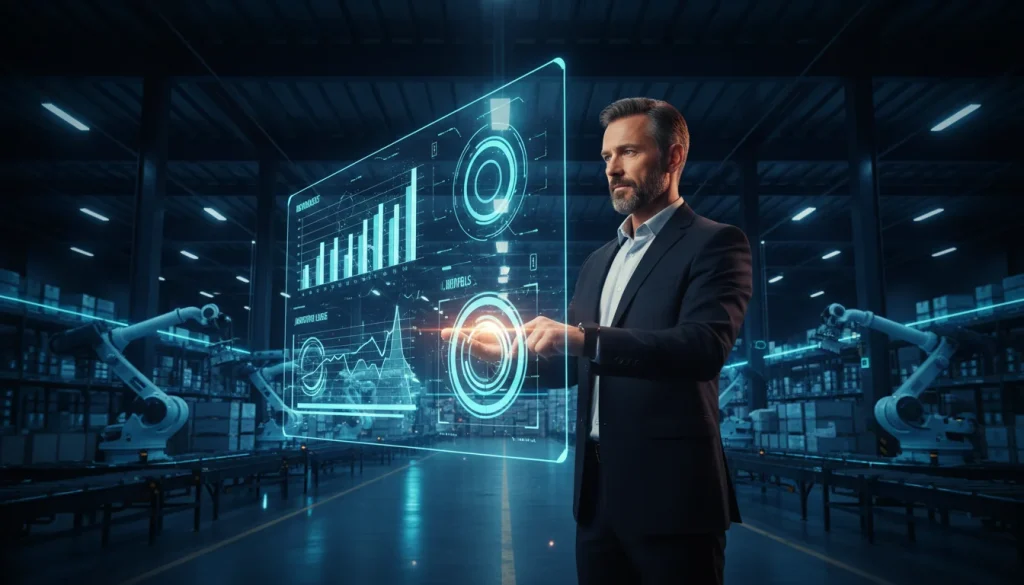
Nissin Foods, the global food manufacturer renowned for its Cup Noodles and Top Ramen brands, is deploying an AI-powered demand and supply planning tool from technology vendor Blue Yonder, a strategic move that enables Logistics Managers to achieve greater precision in inventory management and forecasting while significantly reducing operational expenditures. This initiative highlights a growing trend among major food manufacturers to leverage AI for supply chain resilience and efficiency.
- Nissin Foods is integrating Blue Yonder’s artificial intelligence platform to optimize demand and supply planning.
- The core objectives include enhancing forecasting accuracy, refining inventory management, and achieving significant operational cost reductions.
- This digital transformation is poised to strengthen customer relationships by improving service capabilities and responsiveness to market changes.
- The broader food manufacturing sector is actively adopting AI tools for logistics managers, with companies like Hormel Foods and Mondelēz International making similar strategic investments.
AI for Supply Chain: Nissin Foods’ Strategic Digital Shift
In a significant step towards digital transformation, Nissin Foods has announced the implementation of an advanced artificial intelligence solution designed to sharpen its demand and supply planning processes. This new system, provided by Blue Yonder, is central to the company’s efforts to enhance operational efficiency across its extensive supply chain. For Logistics Managers, this translates into a powerful new capability to manage the complexities of product flow, from raw materials to consumer shelves.
The integration of this AI-driven platform is specifically aimed at improving inventory management and elevating the accuracy of demand forecasting. By leveraging sophisticated machine learning algorithms, the system automates the prediction of future demand, moving beyond traditional statistical methods to incorporate a wider array of influencing factors. This automation is critical for reducing manual effort and increasing the reliability of planning data, directly benefiting the daily operations of Logistics Managers responsible for stock levels and order fulfillment.
Furthermore, Nissin Foods anticipates that this technological shift will yield substantial reductions in operational costs. By optimizing inventory and forecasting, the company can transition from capital-intensive investments in excess stock or emergency logistics to more predictable and efficient expenditure models. The system is also expected to increase fill rates, ensuring products are consistently available, while simultaneously reducing overall inventory levels, a delicate balance that advanced AI for supply chain solutions are uniquely positioned to achieve.
How AI Tools for Logistics Managers Drive Operational Efficiency
The strategic deployment of AI tools for logistics managers, such as the one adopted by Nissin Foods, directly impacts several critical areas of operational efficiency. According to Yukio Yokoyama, chief representative for the Americas and president and CEO of Nissin Foods, this transformation is not just about internal improvements but also about strengthening external partnerships. He emphasized that the initiative will enable the company to better serve customer needs, anticipate shifts in demand, and adapt proactively to evolving consumer preferences.
For a Logistics Manager, this means moving towards a more predictive and adaptive supply chain. An AI-powered system can analyze vast datasets—including historical sales, market trends, promotional activities, and even external factors like weather or social media sentiment—to generate highly accurate demand forecasts. This foresight allows for optimized production schedules, more efficient warehousing, and better-planned transportation routes, significantly reducing waste and improving delivery reliability.
A practical takeaway for Logistics Managers considering similar advancements is to thoroughly evaluate their current demand forecasting methodologies. Exploring how AI-driven platforms can integrate with existing ERP and WMS systems to provide a competitive edge in demand prediction and inventory optimization is crucial. The ability to automatically adjust to market volatility and consumer behavior changes offers a substantial advantage in maintaining lean yet resilient supply chains.
Broader Trends in Supply Chain AI Adoption
Nissin Foods is not alone in its pursuit of advanced AI for supply chain optimization. Across the food manufacturing sector, numerous companies are actively experimenting with and implementing artificial intelligence tools to enhance various aspects of their logistics and operations. This widespread adoption underscores a clear industry trend towards leveraging technology to navigate increasingly complex global supply chains.
For instance, Hormel Foods, a prominent player in the food industry, integrated o9 Solutions’ comprehensive demand and supply planning capabilities last year. Their objective was similar to Nissin’s: to sharpen forecasting accuracy and bolster overall supply chain resilience. This demonstrates a shared industry understanding that robust supply chain AI is no longer a luxury but a necessity for competitive advantage.
Similarly, Mondelēz International is undertaking a substantial $1.2 billion, multi-year overhaul of its supply chain and ERP system. As part of this ambitious project, the company plans to install advanced automation and AI systems within five of its distribution centers. Such initiatives highlight the growing investment in warehouse AI and intelligent automation to improve throughput, reduce labor costs, and enhance order fulfillment accuracy, providing valuable insights for any Logistics Manager planning future infrastructure investments.
What Does This Mean for the Modern Logistics Manager?
The increasing integration of AI demand forecasting and broader logistics AI solutions fundamentally reshapes the role of the modern Logistics Manager. In 2026, proficiency with AI-driven insights and platforms is becoming as essential as traditional operational expertise. Managers are now empowered to make more data-informed decisions, moving from reactive problem-solving to proactive strategic planning.
The shift towards AI for supply chain management offers concrete benefits: reduced stockouts due to improved forecasting, lower carrying costs from optimized inventory levels, and enhanced customer satisfaction through better service and product availability. For Logistics Managers, this means focusing less on manual data aggregation and more on interpreting AI-generated insights, refining strategies, and managing the technological infrastructure that supports these advanced capabilities.
As the industry continues to evolve, staying abreast of developments in AI tools for logistics managers, including advancements in AI route optimization and predictive analytics, will be paramount. Embracing these technologies is not merely about adopting new software; it’s about transforming the entire operational paradigm to build more agile, efficient, and resilient supply chains capable of navigating future disruptions.
Frequently Asked Questions
What specific capabilities does Blue Yonder’s AI tool offer Nissin Foods for supply chain management?
Blue Yonder’s AI-powered platform provides Nissin Foods with automated forecasting using machine learning, improved inventory management, enhanced fill rates, and reduced overall inventory levels, all aimed at sharpening demand and supply planning accuracy.
How does Nissin Foods expect this AI implementation to impact its customer relationships and operational costs?
Nissin Foods anticipates that the AI implementation will strengthen customer partnerships by improving service, anticipating demand changes, and adapting to evolving consumer preferences. Operationally, it aims to reduce costs by shifting from capital-intensive investments to more predictable expenses through optimized planning.
Are other major food manufacturers also adopting AI for their supply chains, and what are they focusing on?
Yes, other major food manufacturers are also adopting AI. Hormel Foods implemented o9 Solutions for integrated demand and supply planning, while Mondelēz International is investing in automation and AI systems within its distribution centers as part of a large-scale supply chain overhaul.
The weekly AI briefing for your profession
One weekly email: the AI changes that actually affect your profession — tools, deals, and what to do about them.