العربية
 English
 Français
 Deutsch
 हिन्दी
 Português
 Русский
 Español
 Türkçe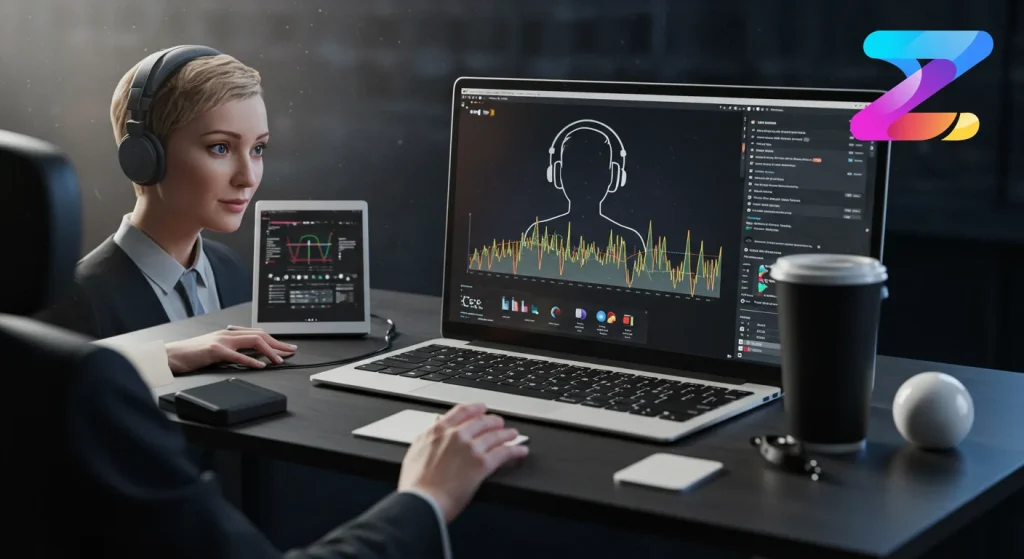
Video Producers can now transform a written script into a fully realized, multi-lingual talking head video, complete with natural-looking lip-sync and custom avatars, in a matter of hours – a task that previously demanded extensive studio time, multiple talent hires, and weeks of post-production.
This shift represents a fundamental change in how video content, especially explainer videos, corporate communications, and training modules, can be conceptualized and executed. For the modern Video Producer, the daily grind of coordinating talent schedules, managing costly studio time, and navigating the complexities of post-production for slight script changes or language localization is rapidly diminishing. What once required a large team and significant budget can now be accomplished by a single Video Producer leveraging sophisticated AI tools. This new capability unlocks unprecedented scalability, allowing content creators to produce more variations, target diverse audiences with localized content, and iterate on messages with incredible speed. It’s not just about saving time; it’s about freeing up creative energy from logistical burdens and redirecting it towards strategic storytelling and refinement.
The impact on daily workflow is profound. A Video Producer no longer has to be a master of casting, directing, and complex audio-video synchronization for every talking head segment. Instead, their role evolves into a higher-level strategic one: curating the visual identity of the AI avatar, refining the script for maximum impact, and overseeing the overall creative vision. The advent of AI video generation tools means that barriers to entry for high-quality, professional video content are lowering, enabling individuals and smaller teams to compete with larger production houses in terms of output volume and global reach.
Before [Traditional Talking Head Production]: A Video Producer needed to hire talent, schedule studio time, manage lighting and audio, direct performances, record multiple takes, potentially hire translators and new talent for localization, meticulously edit footage for pacing and continuity, and then painstakingly re-sync audio for any localized versions. This entire process, for a single 2-minute explainer video, could easily stretch over two to three weeks, incurring significant costs in talent fees, studio rentals, and specialized post-production.
After: The Video Producer inputs a final script directly into an AI talking video platform. They select or create a custom avatar, choose from a library of voices, and specify the desired language(s). With a few clicks, the platform generates the entire video – complete with natural-looking lip-sync, appropriate facial expressions, and high-quality synthetic speech in the chosen language. Minor edits to the script or voice can be made instantly, regenerating the video in minutes. The result is a professional-grade talking head video, often created and iterated upon within a single afternoon.
The tools making this possible are consolidating a range of sophisticated artificial intelligence tools into accessible platforms. Vmake, for example, is emerging as an all-in-one AI talking video solution aiming to simplify the entire process from script to screen. It promises to integrate avatar creation, voice synthesis, and seamless lip-syncing into a single, intuitive interface. This brings capabilities that were once spread across specialized AI tools for video producers, such as Synthesia and HeyGen for avatar generation, into a more cohesive ecosystem. While established names like Adobe Premiere AI continue to enhance traditional video editing AI with smart features, and Descript streamlines text-based video editing, platforms like Vmake push the boundary further by generating the foundational video content itself. These AI post-production advancements fundamentally shift the bottleneck from technical execution to creative ideation and script development.
To start leveraging these capabilities this week, a Video Producer should begin by identifying a low-stakes project that could benefit from rapid production or localization. Perhaps an internal company update, a short explainer for social media, or a preliminary client pitch that needs a quick visual component. Next, sign up for a free trial with a platform like Vmake, Synthesia, or HeyGen. These platforms typically offer a generous free tier or trial period that allows for hands-on experimentation. Finally, dive in and experiment. Focus on understanding the nuances of avatar selection, voice customization, and the iteration process. Don’t aim for perfection on the first try; instead, concentrate on learning the speed and flexibility these AI tools offer to quickly generate and refine your talking head video content.
Bottom Line: AI talking video solutions are fundamentally redefining what’s achievable for every Video Producer, liberating them from traditional production constraints and enabling unprecedented creative agility. Embracing these AI tools isn’t about automating away creativity, but empowering it to reach wider audiences and achieve more impactful results.
See Zekai first in Google
The weekly AI briefing for your profession
One weekly email: the AI changes that actually affect your profession — tools, deals, and what to do about them.