العربية
 English
 Français
 Deutsch
 हिन्दी
 Português
 Русский
 Español
 Türkçe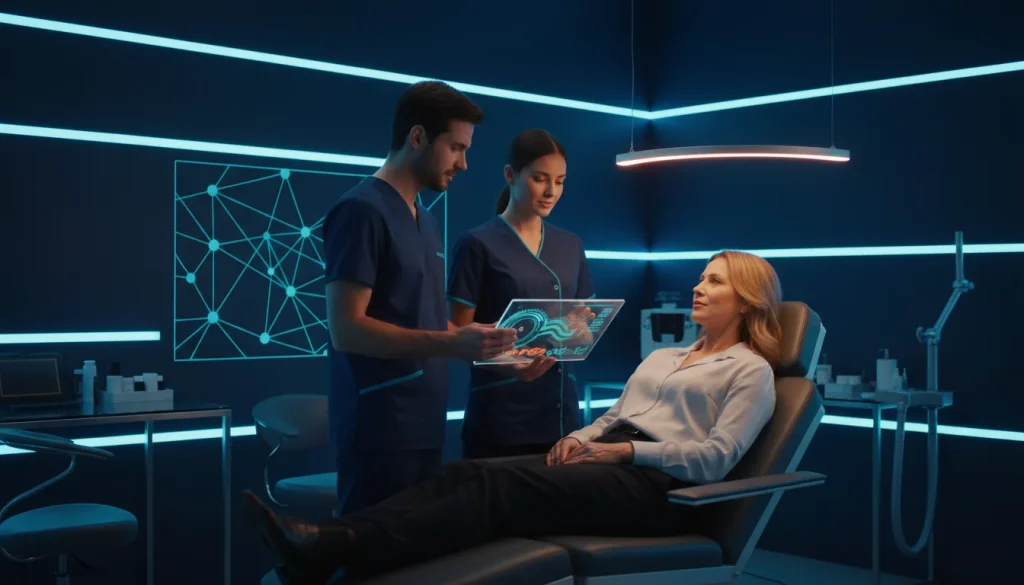
Mount Sinai has announced the expansion of its Epic Ambient AI tool to nursing staff, following a period where physicians experienced significant reductions in documentation time. This move in AI in healthcare aims to further streamline clinical workflows, directly benefiting Doctors by allowing more focused attention on patient care and complex medical decision-making.
- The Epic Ambient AI tool is now being deployed for nurses at Mount Sinai.
- This expansion follows successful implementation with physicians, who reported significant cuts in documentation time.
- The initiative seeks to enhance overall clinical efficiency, improve interdisciplinary communication, and foster more patient-centered care.
- It signifies a growing trend in the adoption of medical AI for administrative burden reduction across healthcare teams.
The Evolution of AI in Healthcare Documentation
The integration of artificial intelligence into clinical environments continues to reshape daily medical practice. Mount Sinai’s journey with ambient AI began with its successful deployment for physicians, addressing a long-standing challenge: the overwhelming burden of administrative documentation. This initial phase demonstrated tangible benefits, allowing medical professionals to reclaim valuable time previously spent on charting and data entry.
For years, Doctors have grappled with the increasing demands of electronic health record (EHR) systems, often leading to burnout and reduced direct patient interaction. The initial success with physicians using the Epic Ambient AI tool underscored its potential to mitigate these pressures, paving the way for its broader application within the hospital system.
How Epic Ambient AI Supports Clinical Teams
Ambient AI technology functions by passively listening to patient-clinician conversations, using advanced natural language processing to transcribe, summarize, and populate relevant information directly into the EHR. This intelligent automation significantly reduces the need for manual data entry, allowing healthcare providers to maintain focus on the patient rather than the computer screen.
The extension of this technology to nurses is a strategic step to create a more cohesive and efficient clinical workflow. Nurses, like Doctors, spend a considerable portion of their shifts on documentation, from recording vital signs and medication administration to detailing patient assessments and care plans. By leveraging ambient AI, nurses can capture these critical details in real-time during patient interactions, ensuring accuracy and completeness without interrupting the flow of care. This enhancement in clinical AI capabilities supports a more integrated approach to patient data management.
Practical Benefits for Doctors and Patient Care
The expansion of ambient AI to nursing staff offers several direct advantages for Doctors. With nurses able to document more efficiently and comprehensively, physicians receive more accurate and timely information within the EHR. This improved data quality can enhance diagnostic processes, inform treatment decisions, and streamline interdisciplinary communication, ultimately leading to better patient outcomes.
Furthermore, by reducing the documentation load on nurses, the entire care team can operate with greater efficiency. This collaborative approach, supported by AI tools for doctors and nurses alike, fosters an environment where administrative tasks are minimized, allowing more time for direct patient engagement, critical thinking, and complex medical procedures. The ripple effect of this efficiency can lead to a more satisfied workforce and a more positive patient experience.
The Path Forward for Healthcare AI Adoption
Mount Sinai’s decision to scale its Epic Ambient AI implementation is indicative of a broader trend towards integrating sophisticated healthcare AI solutions into everyday practice. This move highlights the potential for AI to support not just physicians, but the entire care continuum, from nursing to administrative roles, by automating repetitive tasks and enhancing data accuracy.
While the focus here is on documentation, the broader landscape of medical AI continues to evolve, with advancements in areas like diagnostic AI and medical imaging AI promising further transformations in clinical practice. For Doctors evaluating similar AI tools for their own practices, the key takeaway from Mount Sinai’s experience is the importance of integrated solutions that demonstrably reduce administrative burdens across the entire clinical team, ensuring seamless EHR integration and clear benefits for both providers and patients.
Frequently Asked Questions
How does Mount Sinai’s expansion of Epic Ambient AI benefit Doctors directly?
By extending the tool to nurses, Doctors gain from more accurate, comprehensive documentation of patient interactions, reducing their own charting burden and freeing up time for complex clinical tasks and direct patient engagement.
What is ambient AI, and how does it reduce documentation time in healthcare?
Ambient AI uses natural language processing to passively listen to patient-clinician conversations, automatically transcribing and summarizing key points directly into the electronic health record, thereby automating much of the manual documentation process.
Are there specific considerations for Doctors when evaluating similar AI tools for their practice?
Doctors should prioritize tools that integrate seamlessly with existing EHR systems, demonstrate clear evidence of time-saving for both medical and nursing staff, and ensure data security and patient privacy compliance.
The weekly AI briefing for your profession
One weekly email: the AI changes that actually affect your profession — tools, deals, and what to do about them.