العربية
 English
 Français
 Deutsch
 हिन्दी
 Português
 Русский
 Español
 Türkçe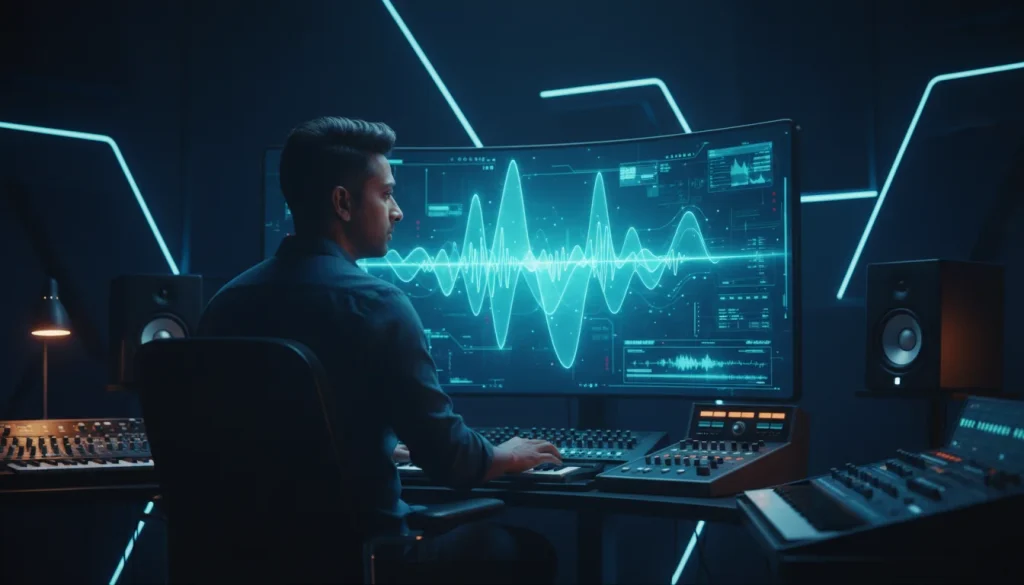
South Korea’s leading copyright collective, KOMCA, has ended its ban on songs created with an AI music generator, a pivotal development for Music Producers worldwide navigating the evolving landscape of artificial intelligence in creative work. This significant policy reversal means that human-assisted AI compositions are now eligible for copyright registration and royalty payments, provided creators meticulously document their human contributions.
- **Eligibility for AI-Assisted Works:** Music Producers can now register songs incorporating AI tools with KOMCA, provided a substantial human creative contribution is evident in the writing, composition, or arrangement.
- **Mandatory Disclosure:** Creators must explicitly declare AI usage, name specific AI tools, and detail their personal creative input during registration.
- **Risk of Penalties:** False filings can lead to royalty holds, clawbacks, and contract termination, with potential triple-penalty claims for intentional misrepresentation.
- **Documentation is Key:** Maintain thorough records, including DAW project files, revision histories, sheet music, and prompt logs, to substantiate human involvement if requested.
KOMCA Reverses Stance on AI Music Generator Contributions
Effective Monday, August 3, 2026, the Korean Music Copyright Association (KOMCA) has officially updated its guidelines, allowing the registration of music created with the assistance of artificial intelligence. This marks a significant departure from their previous policy, which, since March 24, 2025, had prohibited any work with even a “0%” AI contribution from being registered or receiving royalties. The former rule was so strict it even barred compositions that merely utilized a chord-suggestion tool embedded within a digital audio workstation (DAW).
This policy shift directly impacts Music Producers in South Korea and sets a precedent for how copyright bodies may adapt globally. It acknowledges the increasing integration of AI tools for music producers into the creative process, moving away from an outright ban towards a framework of regulated inclusion. The change recognizes that AI can serve as a powerful assistant rather than solely a replacement for human artistry.
What Does This Mean for Music Producers Using AI Tools?
Under the new system, Music Producers wishing to register AI-assisted works with KOMCA must adhere to a strict disclosure process. During registration, creators are required to specify which elements of their track involved AI, identify the particular AI tools they employed (such as advanced AI audio production suites or AI composition tools), and comprehensively describe their own creative contributions. Crucially, the work must not have been generated solely from a prompt, and a human must have made a “substantial and leading” creative contribution to the melody, lyrics, structure, or arrangement.
While KOMCA has not mandated specific paperwork for initial registration, it strongly advises Music Producers to maintain meticulous records. This includes project files from their digital audio workstation, detailed revision histories, sheet music, and logs of any prompts used with AI music generator platforms. This evidence could be crucial if KOMCA requests further verification, potentially subjecting the work to a technical review or an internal deliberation panel, with a 30-day window for creators to respond.
Why the Policy Shift? Unveiling the Audit’s Impact
The catalyst for KOMCA’s dramatic policy reversal was a comprehensive audit conducted in March 2026 by South Korea’s Board of Audit and Inspection. This audit scrutinized 8,540 songs from 29 prolific writers who had entrusted over 200 works each to KOMCA in 2024. The findings were stark: approximately 5,200 of these works, representing 60.9%, were deemed likely to have been composed with AI assistance. The audit, which encompassed 11 Korean copyright trust bodies, concluded that these organizations were registering works and disbursing royalties without effectively verifying AI usage.
Initially, KOMCA had defended its blanket ban, citing the absence of reliable technology to definitively detect AI involvement in music. This argument highlighted the inherent difficulty in policing such a ban, ultimately leading to a system that relied heavily on creator self-reporting – a principle now foundational to the revised disclosure framework. This shift underscores a pragmatic adaptation to the realities of modern music creation.
The Consequences of False Filings and Future Revisions
To ensure compliance and deter fraudulent registrations, KOMCA has introduced stringent penalties for false declarations. A companion amendment to KOMCA’s trust-management contract terms, approved at the same July 28 board meeting, outlines these repercussions. If a filing is found to be false, or if a work generated entirely by an AI music generator is deceptively registered as human-made, KOMCA reserves the right to withhold royalty payments, reclaim previously disbursed sums, and even terminate the trust contract with the creator.
For cases involving intent or gross negligence, KOMCA is planning further revisions to its terms. These future amendments would allow the association to claim penalties up to three times the amount wrongly received. This robust enforcement mechanism aims to safeguard the integrity of the copyright system and ensure fair compensation for human creators. While KOMCA is now accommodating human-led AI works, it continues its broader campaign, launched in February 2026 alongside five other South Korean music-rights bodies, to advocate for clear distinctions between human and AI-generated works and to ban AI training without explicit creator consent.
Frequently Asked Questions
What is the primary change in KOMCA’s policy regarding AI-assisted music for Music Producers?
KOMCA has reversed its ban, now allowing the registration and royalty payments for songs created with AI tools, provided a human creator made a substantial and leading contribution.
What specific information must Music Producers provide when registering an AI-assisted track with KOMCA?
Creators must disclose which parts of the track involved AI, name the specific AI tools used, describe their own creative contribution, and confirm the work wasn’t generated solely by a prompt.
What are the risks for Music Producers if they falsely claim a purely AI-generated song as human-made?
False filings can lead to KOMCA holding royalty payments, clawing back sums already paid, terminating the creator’s trust contract, and potentially facing penalties up to three times the wrongly received amount for intentional fraud.
The weekly AI briefing for your profession
One weekly email: the AI changes that actually affect your profession — tools, deals, and what to do about them.