العربية
 English
 Français
 Deutsch
 हिन्दी
 Português
 Русский
 Español
 Türkçe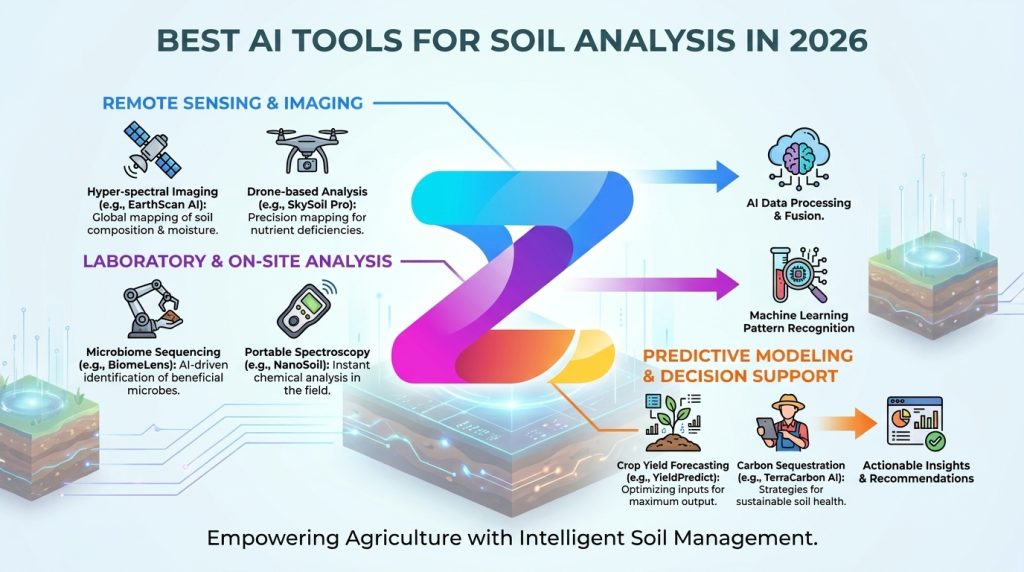
The short answer
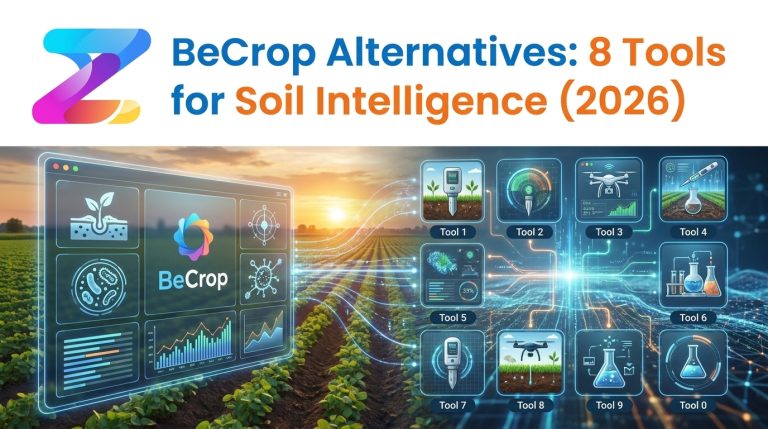
The best AI tools for soil analysis in 2026 are BeCrop for biological soil health, Pattern Ag for predictive pathogen risk, and Boomitra for carbon credit programs. These tools use AI to analyze either physical soil samples or satellite data to provide deeper insights than traditional chemical tests, identifying microbial activity, nutrient cycling pathways, and carbon sequestration potential.
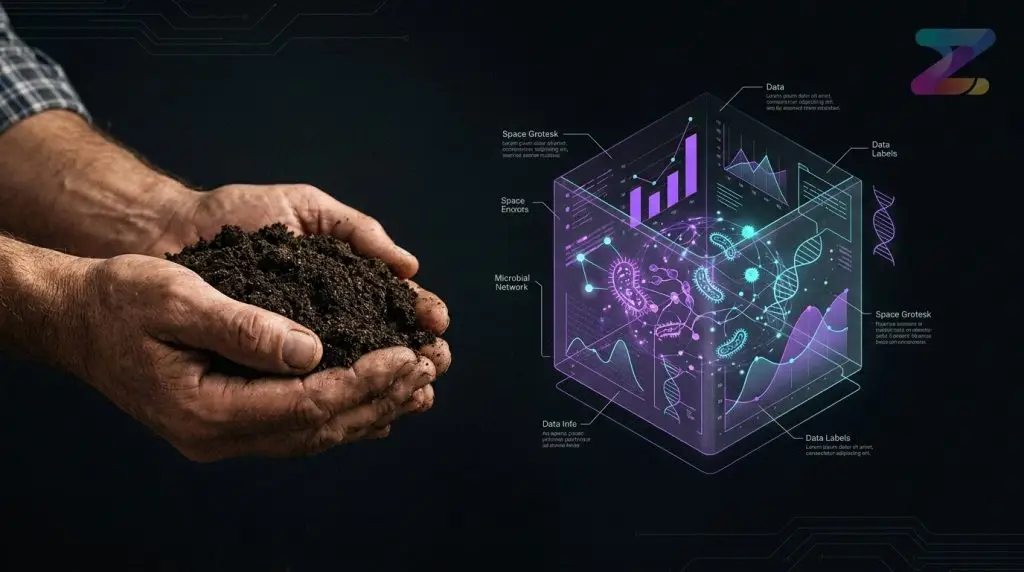
Traditional soil testing gives you a snapshot of chemical nutrients. AI-powered soil analysis tells you the story of your soil as a living system. Instead of just seeing N-P-K levels, these tools use machine learning to analyze your soil’s microbiome, predict disease pressure before it appears, and even quantify carbon sequestration for new revenue streams. For professionals in AI-powered smart farming, this is the difference between looking at a balance sheet and having a full market analysis.
But the market is crowded with bold claims. To find what actually works, we evaluated the leading platforms on the specific jobs a farmer or agronomist needs done. ZEKAI reviews tools independently; our recommendations are based on our own analysis of their capabilities and publicly verifiable information.
How We Ranked the Tools
Not all soil AI is created equal. A tool for carbon markets is different from one for diagnosing in-season disease. We judged these platforms on four practical criteria:
- Primary Function: What specific job does this tool do? (e.g., biological analysis, carbon measurement, remote sensing).
- Actionability: How clear and useful are the reports for making a management decision (e.g., changing fertilizer, selecting a biological, entering a carbon program)?
- Cost & ROI: What is the verified cost per acre or per sample as of September 2026, and what is the expected return?
- Scientific Rigor: How is the AI model trained and validated? Is it based on physical samples, remote data, or a combination?
AI Soil Analysis Tools: 2026 Comparison
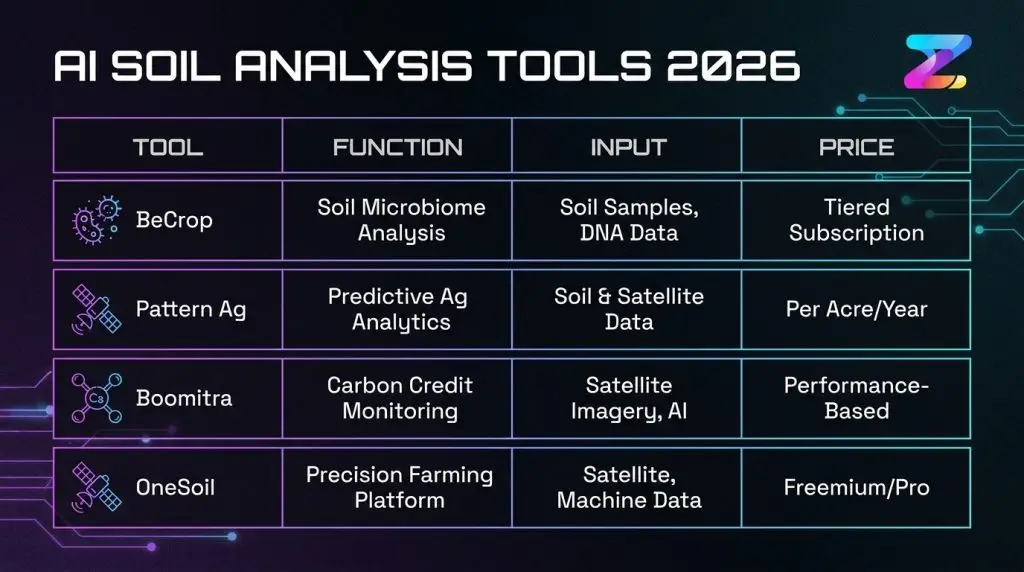
| Tool | Primary Function | Input Method | Key Output | Verified Price (as of Sep 2026) |
|---|---|---|---|---|
| BeCrop (by Biome Makers) | Biological soil analysis | Physical soil sample (DNA sequencing) | Nutrient cycling, disease risk, biodiversity scores | ~$180 per sample + chemistry test cost. |
| Pattern Ag (by EarthOptics) | Predictive pest & disease risk | Physical soil sample (DNA sequencing) | Field-level risk maps for specific diseases/nematodes | ~$4/acre (EarthOptics “Total Farm” platform) |
| Boomitra | Soil carbon credit verification | Remote sensing (satellite & AI) | Verified carbon credits, soil moisture/health data | No cost to farmer; majority share of credit revenue. |
| Agurotech | Real-time soil moisture monitoring | In-ground wireless sensor | 7-day irrigation recommendations, soil temp/EC | Hardware purchase + annual license. |
| Trace Genomics (by Miraterra) | Biological analysis & nutrient pathways | Physical soil sample (DNA sequencing) | Pathogen risk, N & P cycling indicators | Quote-based, historically higher than chemical tests. |
| OneSoil | Field management zone creation | Satellite imagery | NDVI maps, variable-rate application zones | Free plan available |
| Verdi | Precision irrigation automation | IoT valve controllers & sensors | Plant-level water & fertilizer management | Hardware purchase + software subscription. |
Swipe the table sideways →
world’s soils are already degraded, threatening agricultural productivity and food security. Source: fao.org
Best for Biological Health: BeCrop
BeCrop
The industry standard for a deep, DNA-based understanding of your soil’s microbiome.
Pricing on request
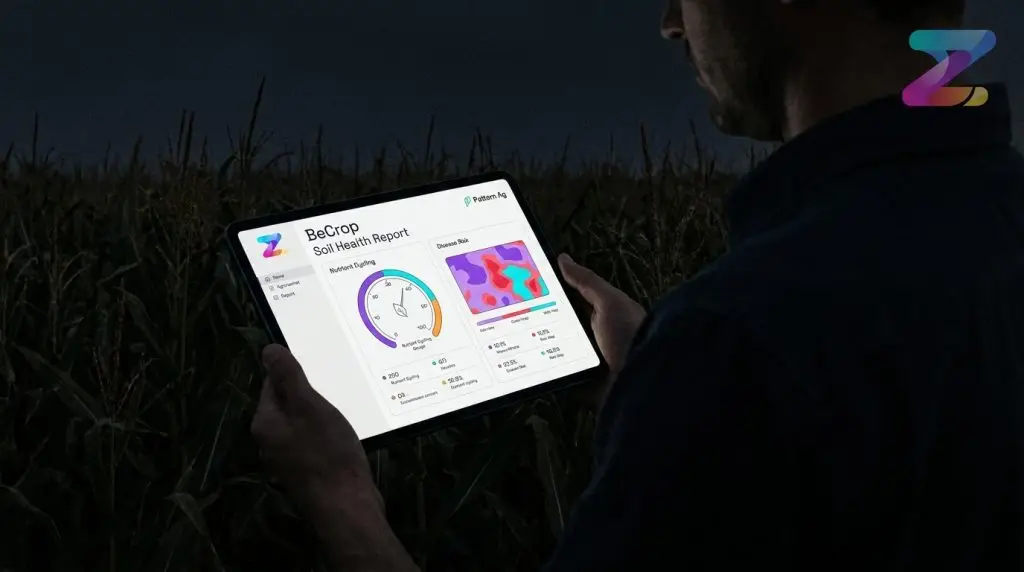
BeCrop by Biome Makers is the leader in functional soil analysis. Instead of just telling you what nutrients are present, it uses DNA sequencing to identify the millions of bacteria and fungi in your soil and, more importantly, what they do. The AI-powered platform translates this complex biological data into actionable reports on nutrient cycling (how well your soil makes N, P, and K available), disease risk, and overall biodiversity.
The latest version, BeCrop 4.0, launched in early 2026, expanded its DNA identification capabilities by over 30% and improved its benchmarking against a larger global dataset. This means the reports are more accurate and the recommendations—like which specific biological products to apply to address a deficiency in phosphorus mobilization—are more precise.
What It Does Badly: BeCrop is not a replacement for a standard chemical test; in fact, it often must be paired with one. The cost, around $180 per sample plus the cost of the separate chemical test, makes it a strategic tool for high-value crops or problem fields, not something you’d use across thousands of acres of row crops. The insights are profound but require an agronomist or a committed farmer to interpret and act on the complex biological feedback.
Who Should Buy It: Growers of high-value specialty crops (vineyards, orchards, vegetables) and farmers practicing regenerative agriculture who want to measure the biological impact of their practices. Agronomy consultants use it to diagnose difficult fields where chemical tests fall short.
- Price from
- ~$180/sample + lab fees
- Free tier
- Biome Makers has periodically offered free analysis for select crops through its Fields4Ever program (e.g., cotton producers in 2026); check current availability
Best for Carbon Credits: Boomitra
Boomitra
The most scalable and farmer-friendly platform for generating high-integrity soil carbon credits.
Pricing on request
Boomitra has emerged as a leader in the agricultural carbon market by solving the biggest barrier: measurement cost. Instead of relying solely on expensive physical soil sampling, Boomitra uses satellites and AI to measure, report, and verify (MRV) changes in soil organic carbon across massive landscapes. Their technology has been validated under rigorous third-party standards like Verra’s VM0042 methodology.
For the farmer or rancher, the model is simple and powerful. There are no upfront costs to join a project. Boomitra and its local partners provide support for adopting regenerative practices (like cover cropping or reduced tillage), and the farmer receives the majority of the revenue from the sale of the resulting carbon credits. In a landmark project in Northern Mexico, Boomitra issued over 3 million Verra-verified credits, demonstrating that soil carbon can be a scalable and reliable revenue stream for land stewards.
What It Does Badly: Boomitra’s primary focus is carbon, not in-season agronomy. While their platform provides data on soil moisture and health, it’s not designed for granular, day-to-day decisions like a dedicated precision ag tool. Also, carbon farming requires a multi-year commitment, and credit values can fluctuate with the voluntary carbon market.
Who Should Buy It: Farmers and ranchers who are implementing or willing to implement new regenerative practices and want to generate a new revenue stream. It is especially well-suited for large-acreage operations where traditional soil sampling for carbon would be cost-prohibitive.
- Price from
- Free for farmers
- Free tier
- Majority of carbon credit revenue is guaranteed to the farmer/rancher
farming market is projected to grow from $642 million in 2025 to over $2.4 billion by 2035. Source: cervicorn.com
Best for Predictive Disease Risk: Pattern Ag
Pattern Ag
Gives you a map of next season’s disease and pest pressure before you even plant.
Pricing on request
Pattern Ag (now part of EarthOptics) uses deep DNA sequencing and machine learning to predict the risk of specific pests and diseases with over 90% confidence, according to the company. By sampling soil in the fall, the platform analyzes the genetic markers of yield-robbing threats like corn rootworm, sudden death syndrome (SDS), and soybean cyst nematode (SCN).
The output isn’t a generic health score; it’s a predictive map of your field showing high, medium, and low-risk zones for specific pathogens. This allows for targeted, proactive management. An agronomist can use a Pattern Ag map to decide which hybrid or variety to plant, what seed treatment is necessary, and where to apply inputs only where they are needed, directly impacting profitability.
What It Does Badly: The cost can be a hurdle, and like other DNA-based tests, it represents a significant step up from a basic chemical analysis. The platform’s value is entirely dependent on having a clear management plan to act on the predictive insights. If you aren’t prepared to change your seed selection or input strategy based on the risk maps, the data is just an expensive novelty.
Who Should Buy It: Large-scale row crop producers (corn, soy) in regions with high, predictable pest and disease pressure. It is built for data-driven agronomists and farmers who want to move from reactive treatment to predictive, zone-based management.
- Price from
- ~$4/acre (EarthOptics Total Farm platform, as of Sep 2026)
- Free tier
- None
Other AI Soil Analysis Tools We Considered
- Agurotech: This Amsterdam-based startup focuses on a single, critical job: irrigation. Their wireless, cable-free Saturnia soil sensor is designed to be installed in minutes and provides real-time data on soil moisture, temperature, and electrical conductivity. The AI platform then delivers a 7-day irrigation recommendation, helping farmers save water and optimize crop productivity. It’s less about broad soil analysis and more about hyper-focused water management.
- Trace Genomics: Now part of Miraterra, Trace was another pioneer in soil DNA sequencing. Like BeCrop, it provides detailed insights into the soil microbiome, focusing on nutrient cycling pathways (especially nitrogen and phosphorus) and pathogen presence for over 70 crops. The acquisition by Miraterra, which specializes in Raman spectroscopy, signals a future where this deep biological analysis could become faster and cheaper. For now, it remains a high-end diagnostic tool for agronomists.
- OneSoil: While not a soil analysis tool in the same vein as BeCrop or Pattern Ag, OneSoil is an essential AI platform for applying soil insights at scale. Its core strength is using satellite imagery and machine learning to automatically define field boundaries and create management zones based on NDVI (vegetation health). The free tier is incredibly powerful for basic monitoring. The paid Pro tier allows you to turn soil data—whether from a lab or another AI tool—into variable-rate prescription maps for fertilizer and seed.
- Verdi: Verdi focuses on automating irrigation at the plant level. It retrofits existing irrigation systems with IoT valve controllers that allow for precise, remote management of water and fertilizer. Its AI software uses predictive analytics to help make irrigation decisions. While it uses soil moisture data, its primary function is hardware automation and control, not soil analysis itself. Farmers using Verdi have seen significant labor and water savings.
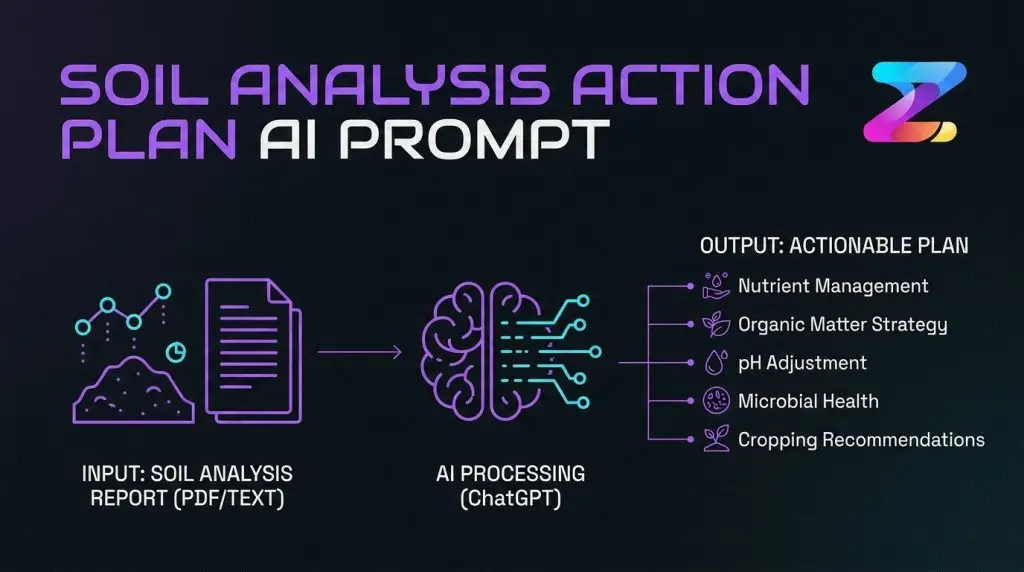
Your BeCrop report shows low biological phosphorus (P) solubilization. Use this prompt with a large language model like ChatGPT to brainstorm solutions.
> "Act as an expert regenerative agronomist. My BeCrop soil analysis report for a field of organic tomatoes indicates 'Low' biological phosphorus solubilization function, despite having adequate P levels in my chemical soil test.
>
> 1.  In simple terms, what does this mean?
> 2.  List five specific, actionable strategies to increase phosphorus availability for my tomato crop using biological methods. For each strategy, name the type of product to look for (e.g., microbial inoculant, specific cover crop species).
> 3.  For each of the five strategies, describe the mechanism by which it improves P solubilization.
> 4. Draft a simple 3-year plan for this field to improve the P-cycle biology, assuming a corn-soy-tomato rotation.leads to an estimated annual loss of $400 billion from reduced agricultural productivity. Source: nature.com
AI-powered soil analysis is a fundamental tool for the future of professional farming. By moving beyond basic chemistry to understand the biological and functional properties of soil, these platforms allow for more precise, more sustainable, and ultimately more profitable agriculture. To learn more about how AI is transforming the industry, visit our hub for AI in agriculture and smart farming.
How does AI analyze soil?
AI analyzes soil in two main ways. First, it uses machine learning to interpret DNA sequencing data from physical soil samples, identifying millions of microbes and their functions related to nutrient cycling and disease. Second, it analyzes satellite imagery and sensor data to map soil properties like moisture, organic carbon, and health across large areas without physical sampling.
What is the most accurate soil test?
It depends on the question you’re asking. For chemical nutrient levels (N-P-K, pH), traditional lab-based chemical tests are the standard. For understanding the biological potential of your soil—how it cycles nutrients, its diversity, and disease risk—AI-powered DNA analysis from platforms like BeCrop or Trace Genomics provides the most comprehensive and accurate picture.
How much does AI soil analysis cost?
As of September 2026, a single AI-powered DNA soil analysis from a service like BeCrop costs around $180, which is in addition to a standard chemical test. Other services like Pattern Ag are now priced per acre through EarthOptics’ bundled “Total Farm” platform, at around $4/acre. Remote sensing platforms for carbon credits, like Boomitra, are typically free for the farmer to join.
Can AI predict soil fertility?
Yes, but in a more advanced way than traditional tests. AI can predict functional fertility by analyzing the microbes responsible for making nutrients plant-available. For example, it can identify if your soil has a robust population of phosphorus-solubilizing bacteria, predicting whether the phosphorus in your soil can actually be used by the crop.
Is soil microbiome analysis worth it?
For high-value crops or fields with persistent problems that chemical tests can’t explain, yes. Understanding your soil’s biology can unlock yield potential, reduce fertilizer costs, and prevent disease outbreaks. For large-scale commodity crops, the cost-benefit must be carefully weighed, often focusing on using the analysis to solve a specific, expensive problem.
What is the difference between BeCrop and Pattern Ag?
BeCrop provides a broad “functional health” report, covering many aspects of nutrient cycling, biodiversity, and general disease pressure. Pattern Ag is more targeted, delivering a predictive risk map for a specific list of key pests and diseases for next year’s crop, such as SCN or corn rootworm. BeCrop tells you about your soil’s overall condition; Pattern Ag gives you a specific forecast.
Where to go next
Three routes, picked for what you just read.
Sources (50)
- AI Biz Guide, “10 Best AI Tools for Farmers and Agriculture in 2026,” April 24, 2026.
- The Microbiome Blog, “Agriculture: Soil Health & Crop Yield Studies,” February 18, 2026.
- Frontiers in Microbiology, “Microbiome as a Key Player in Sustainable Agriculture and Human Health.”
- Boomitra Blog, “Soil Degradation: How Regenerative Farming Reverses Damage,” April 8, 2026.
- Facebook, “AI for Soil Analysis and Health: Tools, Devices, and Apps.”
- Tribiome, “Soil microbiome: A keystone for sustainable agriculture.”
- MDPI, “Beneficial Soil Microbiomes and Their Potential Role in Plant Growth and Soil Fertility,” January 20, 2024.
- PMC, “The land degradation and desertification-socioeconomic nexus in Egypt’s delta region: A case study on Alexandria and Beheira.”
- Flypix, “Best NDVI Mapping Tools for Precision Agriculture and Land Analysis,” January 28, 2026.
- Upstream Ag Insights, “What Agribusinesses Need to Know About Carbon Credit Pricing,” September 27, 2025.
- World Resources Institute, “The Causes and Effects of Soil Erosion, and How to Prevent It,” February 7, 2020.
- Al Jazeera, “Soil erosion: Lost livelihoods, lost incomes and lost food,” December 5, 2019.
- Clemson University Cooperative Extension, “Unlocking the Secrets of Soil: Exploring the Microbiome and Its Applications—Part 1,” April 22, 2024.
- CU Boulder Today, “Soil degradation costs U.S. corn farmers a half-billion dollars every year,” January 12, 2021.
- Landoption, “Agricultural Carbon Credits for Farmers: Soil Carbon Programs,” 2026.
- Cervicorn Consulting, “Carbon Farming Market Size to Surpass USD 2.42 Bn by 2035,” June 25, 2026.
- Imperial College London, “AI-powered soil analysis software wins Imperial’s undergraduate competition,” November 17, 2023.
- Mississippi State University, “Satellite-based tool in development by MSU researchers takes guesswork out of soil sampling,” September 27, 2023.
- Boomitra, “Become a carbon farmer.”
- Springer, “Artificial intelligence for assessing organic matter content and related soil properties,” July 1, 2024.
- Boomitra, “Redefining the carbon credit value frontier,” May 16, 2025.
- UW–Madison CALS, “How wet is America’s soil? Nobody really knows, but AI can help,” January 27, 2025.
- NatureTech Memos, “Top 10 Soil Carbon Sequestration Startups 2026,” April 15, 2026.
- Boomitra, “Verra Issues Record 3.03 Million Carbon Removal Credits from Boomitra Northern Mexico Grassland Restoration Project,” February 4, 2026.
- Grand View Research, “Voluntary Carbon Credit Market Size Report, 2026-2033,” July 15, 2026.
- Biome Makers, “Biome Makers Launches BeCrop® 4.0,” March 30, 2026.
- Sylvera, “Carbon Offset Pricing Trends: What Buyers Should Budget for in 2026,” January 30, 2026.
- Boomitra, “Equitable carbon credits: how Boomitra uplifts landowners,” August 12, 2026.
- Successful Farming, “Biodiversity Index in the Field: A Look at Diagnostic Microbiome Tests for Soil Health,” July 15, 2025.
- Royal Eijkelkamp, “Agurotech Saturnia FDR Soil Moisture Sensor.”
- AgFunderNews, “Miraterra acquires soil DNA startup Trace Genomics: ‘Independent growth wasn’t sustainable’,” July 9, 2025.
- PitchBook, “Verdi 2026 Company Profile,” 2026.
- Royal Eijkelkamp, “Smart Soil Moisture Sensors.”
- Texas A&M AgriLife, “Soil testing, soil results, soil test labs,” March 4, 2024.
- Miraterra, “Trace — Miraterra.”
- Biome Makers, “BeCrop Farm: The Precision Agriculture Tool for Retailers and Farmers,” July 18, 2024.
- GeekWire, “Irrigation tech startup Verdi raises $4.7M to help farmers monitor and control water flow,” May 15, 2025.
- Business Insider, “More than 25% of biodiversity is under our feet… A biotech startup that’s raised $56 million has a plan to help save our soil,” May 12, 2023.
- Tracxn, “Biome Makers – 2026 Company Profile,” July 12, 2026.
- EU-Startups, “10 promising European startups leading precision agriculture,” June 10, 2026.
- BetaKit, “Verdi raises $6.5 million to reduce farmers’ irrigation irritation with automation,” May 16, 2025.
- Midwest Laboratories, “Soil DNA Analysis.”
- AgTechNavigator, “Can Verdi switch on farmers to the benefits of automated irrigation?,” May 20, 2025.
- Facebook, “Free soil microbiome analysis for cotton producers through Fields4Ever,” August 25, 2026.
- Verdi, “Verdi | Easy and Affordable Precision Irrigation Automation.”
- Rabo Investments, “Agurotech.”
- Skywork, “Layers of Soil: AI-Driven Digital Soil Mapping and Analysis,” March 20, 2026.
- ensun, “Top 100 Agritech Companies in Netherlands (2026).”
- Cropnaut, “Pricing.”
- Copernicus, “OpenLandMap-soildb: global soil information at 30 m spatial resolution for 2000–2022+,” February 6, 2026.
See Zekai first in Google
The weekly AI briefing for your profession
One weekly email: the AI changes that actually affect your profession — tools, deals, and what to do about them.