
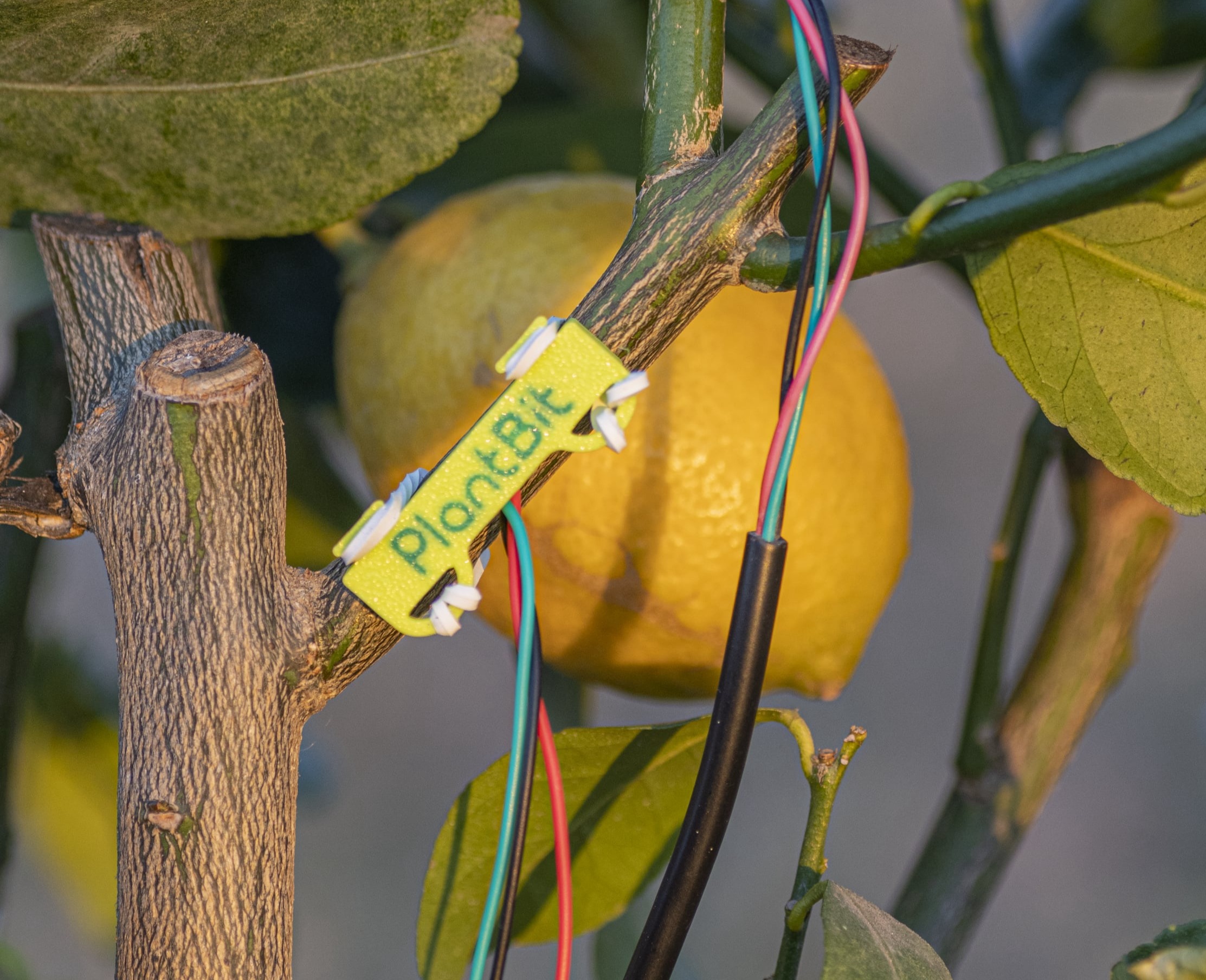
Directly monitor plant sap to cut water use by up to 40% and detect stress 48 hours earlier than other methods.
This in-stem sensor translates real-time plant data into precise irrigation commands via a simple app.
Zekai Verdict
- What is it?
- PlantBit Bioristor is an in-stem sensor that directly monitors a plant's sap flow and health in real-time.
- Best for
- Best for high-value crop growers who need to optimize water usage and get the earliest possible warning of plant stress.
- Not ideal for
- Requires physical installation of a sensor in each monitored plant stem.
- Price
- Pricing on request
- Zekai Score
- 8.4/10
 Lumo
Lumo OneSoil
 Saga Robotics
 Verdi
Verdi Agurotech
 BeCrop
 Boomitra
Top AI in Agriculture & Smart Farming Solutions picks
See all 167 AI in Agriculture & Smart Farming Solutions tools →For Agriculture & Smart Farming professionals seeking the most direct plant health data, PlantBit Bioristor is a leading AI solution. It uses biocompatible sensors inserted directly into the plant stem to monitor sap in real-time. This provides up to 48-hour earlier stress detection and can cut water use by up to 40%, moving beyond environmental guesswork to actionable, plant-based insights.
Before & After
Guessing irrigation needs based on soil data or weather forecasts.
Reactive irrigation schedulesKnowing exactly when and how much to water based on the plant's real-time needs.
Up to 40% less water usedTrusted by 41+
How it compares
PlantBit Bioristor's main alternative is a combination of soil moisture sensors and weather data platforms. While soil sensors are cheaper and easier to deploy, they only measure an environmental proxy, not the plant's actual response. PlantBit provides direct physiological data, detecting stress up to 48 hours earlier. Choose traditional sensors for lower-cost, broad monitoring of soil conditions. Choose PlantBit Bioristor for high-value crops where early, plant-specific stress detection is critical to maximizing yield and quality, and where the investment in per-plant sensors is justifiable.
Is it worth it?
Why Agriculture & Smart Farming Solutions choose this tool
Key Use Cases
PlantBit Bioristor offers a groundbreaking approach by measuring plant health directly from the stem, providing unparalleled early stress detection. This direct data feed is a significant leap over soil or weather-based models. The main trade-off is the physical installation of sensors on individual plants, which may be more suitable for high-value or research-intensive crops rather than broadacre farming.
Frequently asked questions
How does PlantBit Bioristor work?
Is the sensor harmful to the plants?
How much water can I save using PlantBit?
What makes it better than soil moisture sensors?
What crops is the PlantBit Bioristor suitable for?
Is PlantBit available for farms in North America?
Last reviewed:
Start today
Prices and features are updated regularly but can change at any time — always confirm on the official website. Some links on this page are affiliate links.
Top 10 AI tools in this category
Take it with you
- **Understand the Tech:** Learn how the Bioristor OECT sensor works inside the plant stem.
- **Unlock Water Savings:** Discover the methodology behind reducing water use by up to 40%.
- **Master Early Detection:** See how 48-hour advance stress warnings can save your crops.
- **Interpret the Data:** A primer on what sap flow data means for plant health.
- **Supported Crops:** A list of validated crops, from grapevines to maize.
Get PlantBit Bioristor deal alerts
Be the first to know when PlantBit Bioristor drops a new discount, adds features, or changes pricing.
Latest AI news

About PlantBit Bioristor
Full Description
PlantBit Bioristor is an in-stem sensor that directly monitors a plant's sap flow and health in real-time. For farm managers and agronomists, it provides early stress warnings and translates complex biological data into actionable irrigation insights, optimizing water usage and crop yield.
Editorial Verdict
PlantBit Bioristor offers a groundbreaking approach by measuring plant health directly from the stem, providing unparalleled early stress detection. This direct data feed is a significant leap over soil or weather-based models. The main trade-off is the physical installation of sensors on individual plants, which may be more suitable for high-value or research-intensive crops rather than broadacre farming.


